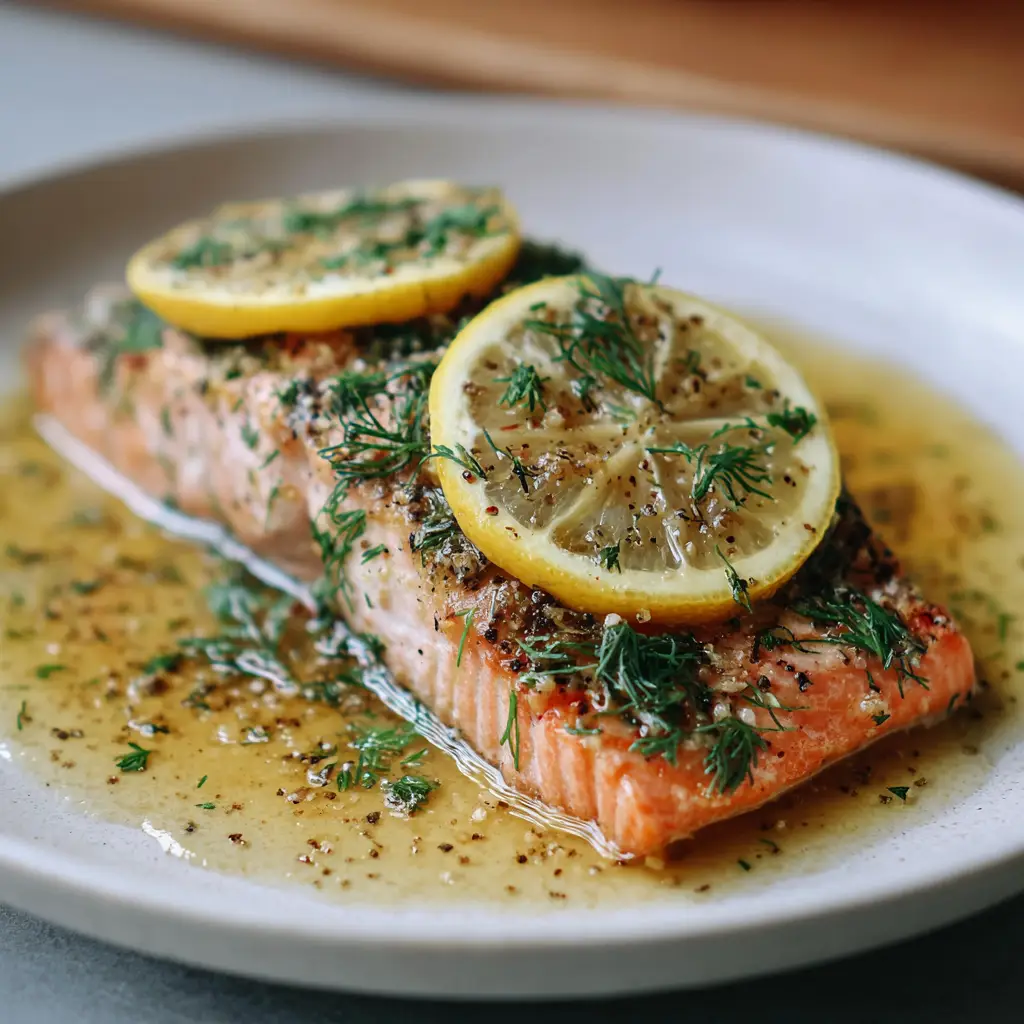
There is nothing quite as inviting as a beautifully prepared Lemon Dill Baked Salmon resting gracefully on a simple white ceramic plate. This elegant yet remarkably simple dish brings restaurant-quality seafood right into your own kitchen. Soft natural daylight always seems to catch the gently roasted, slightly glistening top crust of the fish, making it an absolute showstopper.
When you break into the thick salmon fillet, you will immediately notice its vibrant pink-orange hue and incredible visible flaking texture. The secret to this dish lies in the glossy, buttery lemon pan juices that pool underneath the fish, keeping every single bite luxuriously moist.
Topped with thin round slices of slightly caramelized lemon and sprinkled generously with finely chopped fresh green dill, this recipe is a masterclass in contrasting flavors. Finished with coarse cracked black pepper, this Lemon Dill Baked Salmon is about to become your family’s most requested dinner.
Why This Citrus and Herb Seafood Dish is a Masterpiece
- Vibrant Visual Appeal: The bright pink-orange hue of the fish contrasts stunningly with the vibrant green herbs, making it feast for the eyes before you even take a bite.
- Perfect Textural Balance: You get a gently roasted, slightly glistening top crust that gives way to a tender, flaking interior.
- Luxurious Sauce: A thin coating of glossy, buttery lemon pan juices naturally develops in the baking dish, acting as a built-in finishing sauce.
- Foolproof Aromatics: The caramelized lemon slices infuse the fish with deep, sweet-tart oils without ever becoming bitter.
Essential Grocery Store Grabs for Glossy Pan Juices
Center-Cut Thick Salmon Fillets: You will need 4 fillets, about 6 oz (170g) each. Thick cuts are absolutely critical to achieving that visible flaking texture without drying out the center.
Fresh Lemons: Grab 2 large lemons for this recipe. One will be juiced to create the acidic base of the sauce, and the other will be cut into thin round slices for roasting on top.
Unsalted Butter: Use 4 tbsp (56g) of high-quality unsalted butter, melted. This is the foundational ingredient that creates the rich, glossy pan juices underneath the fish.
Fresh Green Dill: You need 1/4 cup (10g) of finely chopped fresh green dill. Adding this right at the end preserves its bright color and delicate, grassy flavor.
Coarse Cracked Black Pepper: Keep 1 tbsp (7g) of coarse cracked black pepper on hand. The large granules provide a satisfying, slightly spicy crunch against the soft fish.
Extra Virgin Olive Oil: Just 1 tbsp (15ml) is needed to lightly brush the top of the fish. This promotes that highly desirable, gently roasted glistening crust.
Honey: A secret weapon! Use 1 tsp (5ml) brushed over the lemon slices. It accelerates the Maillard reaction, yielding perfectly caramelized citrus rings.
Fresh Garlic & Kosher Salt: Mince 2 cloves of garlic for the pan juices and use 1 tsp (6g) of kosher salt to properly season the fillets from edge to edge.
The Chef’s Toolkit for Perfectly Roasted Fish
To capture the exact textures detailed in our culinary blueprint, you will need a heavy-duty ceramic baking dish or a light-colored metal roasting pan. Dark pans can absorb too much heat and scorch your buttery pan juices.
A high-quality instant-read meat thermometer is non-negotiable for perfectly cooked seafood. You will also want a sharp chef’s knife for finely chopping your herbs, and a silicone basting brush to coat your citrus slices with honey.
Step-by-Step Guide to Baking Vibrant Flaky Salmon
Preparing the Citrus Butter Foundation
Begin by preheating your oven to 400°F (200°C). In the bottom of your ceramic baking dish, whisk together the melted 4 tbsp (56g) of butter, the juice of one lemon, and the minced garlic.
This creates the foundation for your glossy sauce. As it bakes, these ingredients will mingle with the natural rich oils of the fish.
Seasoning and Assembling the Fillets
Pat your thick salmon fillets completely dry with a paper towel. This ensures the 1 tbsp (15ml) of olive oil adheres properly, leading to a glistening crust.
Season the fillets evenly with the kosher salt. Lay them gently into the prepared baking dish, resting them directly in the butter mixture.
Achieving the Gently Roasted Glistening Crust
Take your thin round slices of lemon and very lightly dab them with the 1 tsp (5ml) of honey. Place two slices on top of each salmon fillet.
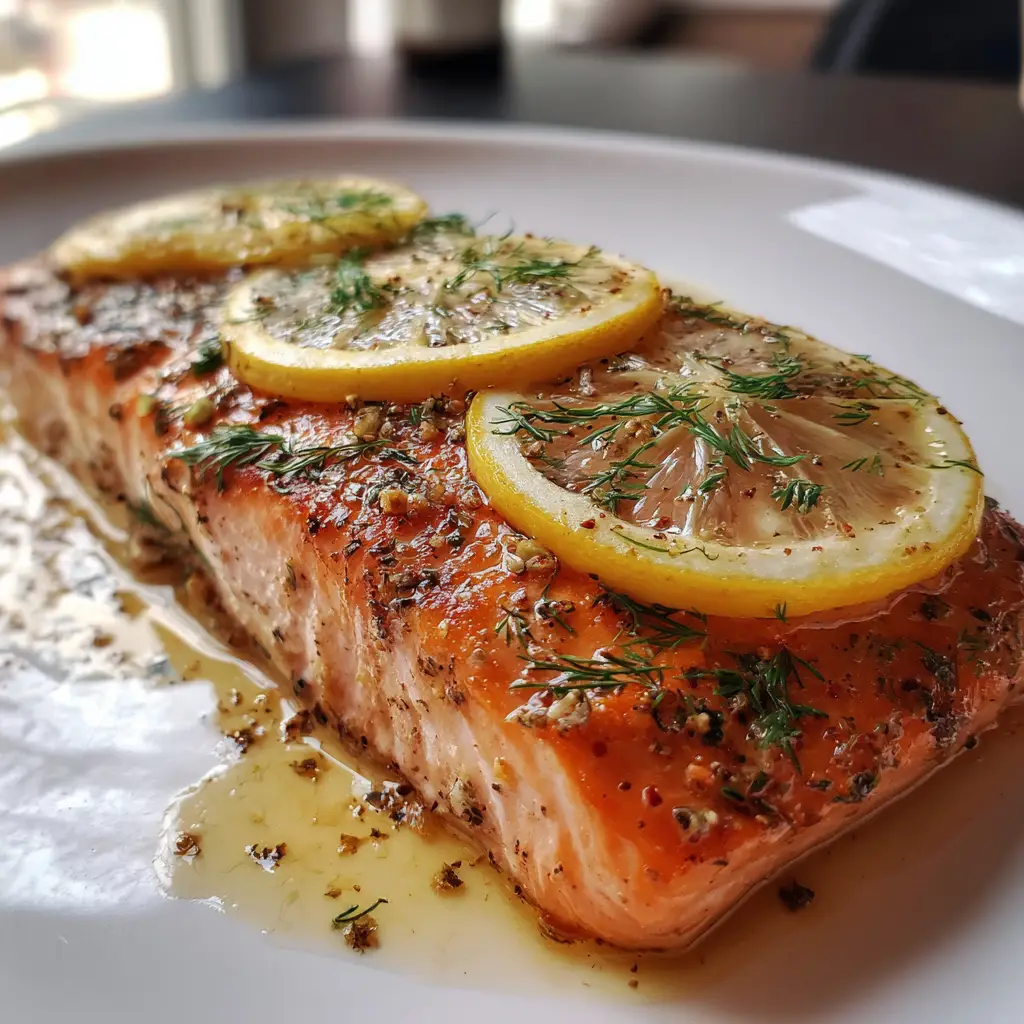
Bake uncovered on the middle rack for 12 to 15 minutes. You are looking for a vibrant pink-orange hue and a culinary sensory cue: the fish should yield and flake easily when gently pressed with a fork.
The Fresh Herb and Cracked Pepper Finish
Remove the dish from the oven. The lemon slices should look slightly caramelized, and the kitchen should smell of sweet roasted garlic and bright citrus.
Using a spoon, baste the top of the salmon with the glossy, buttery lemon pan juices. Finally, sprinkle generously with the finely chopped fresh green dill and the coarse cracked black pepper before serving.
Troubleshooting Your Bake: Pro Secrets for Moist Seafood
- Avoid the White Film: If you see a white substance (albumin) seeping out, your oven might be too hot or the fish is overcooked. Stick to 400°F (200°C) and pull the fish at 135°F (57°C) internal temperature.
- Slicing the Citrus: Keep your lemon slices very thin. Thick slices add too much moisture to the top of the fillet and prevent the crust from glistening.
- Herb Timing: Never bake the dill. Fresh dill turns brown and bitter under high heat. Always sprinkle it generously on the finished, plated dish.
- Reviving the Pan Juices: If your buttery sauce looks broken or separated, remove the fish and violently whisk a splash of warm water into the pan juices to re-emulsify it into a glossy coating.
Keeping Leftovers Fresh: Refrigeration and Warming Tactics
If you have leftover Lemon Dill Baked Salmon, store it in an airtight container in the refrigerator for up to 3 days. Keep the fillets resting in their buttery juices to retain moisture.
To reheat without drying out that beautiful flaking texture, place the fish in a skillet over low heat. Add a splash of water, cover with a lid, and let it gently steam for 4-5 minutes.
Perfect Plate Companions for Buttery Citrus Fish
This dish demands side dishes that can soak up the incredible pan sauces. A bed of fluffy rice or quinoa is always a spectacular choice to rest underneath the fillet.
If you are hosting a dinner party and want to offer a dynamic spread, try pairing this alongside our rich creamy salmon spinach pasta for a seafood lover’s dream. Alternatively, if you want a lighter veggie-forward plate, it goes incredibly well with a hearty winter vegetable casserole.
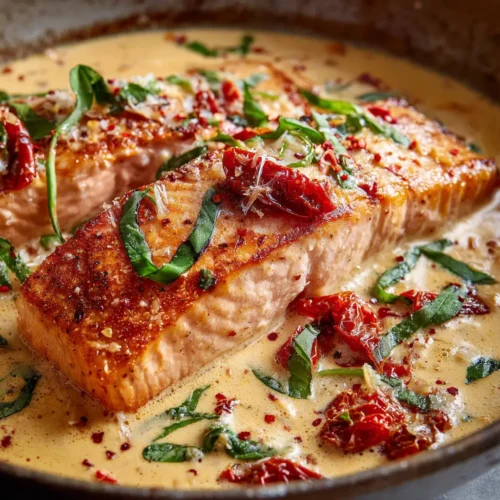
Looking for a vibrant pasta pairing? The bright acidity of this fish matches perfectly with a side of creamy lemon garlic pasta. If you’re a fan of our other seafood hits like the viral Marry Me Salmon, this citrus-forward variation is guaranteed to be your next obsession.
Common Inquiries About Roasting Fish at Home
While fresh green dill is highly recommended for its vibrant color and delicate grassy flavor, you can substitute 1 tablespoon of dried dill. However, the visual appeal and aromatic finish will be slightly different.
No, you should bake this recipe uncovered. Leaving it uncovered allows the direct oven heat to create the gently roasted, slightly glistening top crust characteristic of perfect restaurant-quality salmon.
Lightly brushing your thin lemon slices with a tiny dab of honey before placing them on the salmon accelerates the Maillard reaction, yielding beautifully caramelized citrus edges without burning.
To prevent dry fish, use center-cut thick salmon fillets and bake them at 400°F (200°C) just until they reach an internal temperature of 135°F (57°C). Resting the fillets in buttery lemon pan juices also guarantees a moist, flaky texture.
That white substance is called albumin, a harmless liquid protein that solidifies when heated. Cooking your fish at an optimal temperature and avoiding over-baking minimizes albumin seepage, keeping your salmon looking pristine.
The Ultimate Citrus Herb Seafood Blueprint
Perfectly Flaky Lemon Dill Baked Salmon
Ingredients
Equipment
Method
- Preheat your oven to 400°F (200°C). In the bottom of a ceramic baking dish, whisk together the melted butter, the juice of one lemon, and the minced garlic to create the pan juice foundation.
- Pat the thick salmon fillets dry. Brush evenly with olive oil and season generously with kosher salt. Place them into the buttery baking dish.
- Very lightly dab the thin lemon slices with honey and place two slices on top of each salmon fillet.
- Bake uncovered on the middle rack for 12 to 15 minutes, until the salmon has a vibrant pink-orange hue and flakes easily with a fork.
- Remove from the oven. Baste the salmon with the glossy pan juices, then sprinkle generously with finely chopped fresh green dill and coarse cracked black pepper before serving.
Notes
Never bake the fresh dill; add it after cooking to maintain its bright green color and delicate flavor.
Join Our Community of Passionate Home Cooks
If this perfect Lemon Dill Baked Salmon made its way to your dinner table, we want to hear about it! The contrast of the slightly caramelized lemon slices and the vibrant fresh green dill is a culinary triumph we love seeing recreated.
Drop a five-star rating in the recipe card below and leave a comment sharing your experience. Did you achieve that gorgeous glistening crust? Let us know!
Don’t forget to subscribe to our weekly newsletter for more foolproof, chef-tested dinner inspiration. For daily visual inspiration and behind-the-scenes cooking tips, be sure to pin this recipe and follow us on Pinterest.