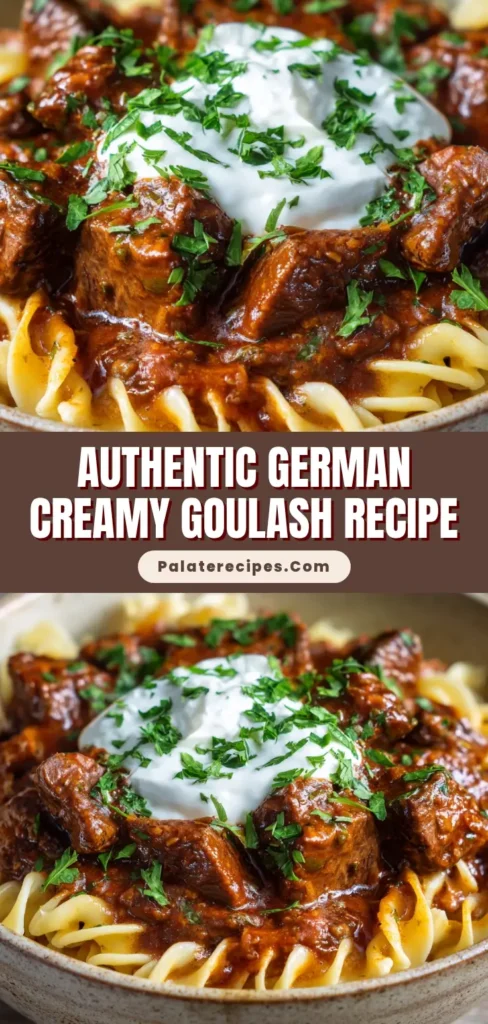
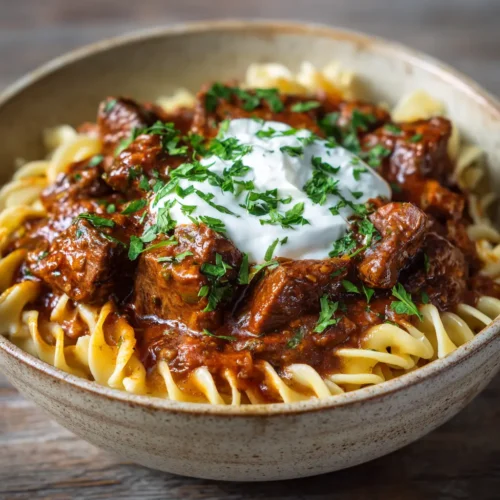
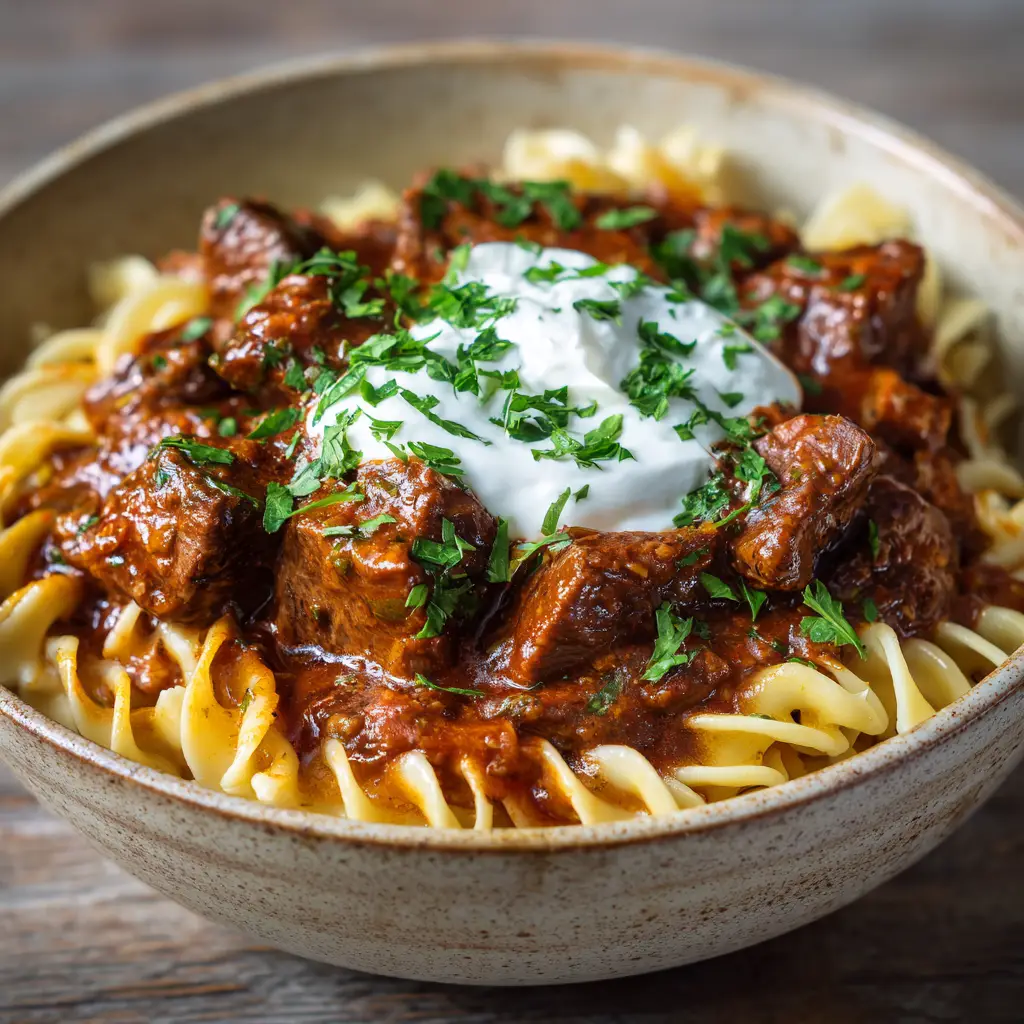
There are few dishes as deeply comforting and richly satisfying as this Authentic German Rahmgulasch. Imagine a rustic ceramic bowl, brimming with tender, seared chunks of beef, all enveloped in a thick, glossy, reddish-brown creamy gravy. This isn’t just any beef stew; this is a masterclass in texture and flavor, where each component is perfectly balanced to create a truly memorable meal. Served over a generous bed of curly egg noodles and finished with a distinct dollop of cool, smooth sour cream and a sprinkle of fresh parsley, it’s a dish that looks exactly as incredible as it tastes.
The secret to its luxuriousness lies in the “Rahm,” the German word for cream. Unlike its Hungarian cousin, which is typically a thinner, broth-based soup, Rahmgulasch boasts a velvety, sour cream-enriched sauce that clings to every piece of meat and noodle. This recipe will guide you through achieving that perfect, visually stunning result you see in the photos—a true handheld smartphone photo moment, ready to be devoured.
Why This Is the Only Goulash Recipe You’ll Ever Need
- Visually Perfect Results: This recipe is reverse-engineered to perfectly match the visual blueprint: deeply seared beef, a glossy reddish-brown sauce, and the iconic sour cream and parsley finish.
- Unbelievably Tender Beef: We use a specific searing and simmering technique that guarantees fall-apart, tender beef chunks every single time.
- The Creamiest, Most Flavorful Gravy: Discover the secret to a thick, velvety, and complex gravy that never curdles, thanks to the magic of sweet paprika and properly tempered sour cream.
- Weeknight Possible, Weekend Worthy: While it tastes like it simmered all day, this dish is surprisingly straightforward, making it perfect for an impressive dinner any night of the week.
The Building Blocks of a Perfect Rahmgulasch
Each ingredient is chosen to create the specific textures and colors you see. Here’s the role each one plays in building our Authentic German Rahmgulasch.
For the Goulash
- Beef Chuck Roast: You’ll need 2 lbs (900g) of beef chuck roast, cut into 1.5-inch (4cm) chunks. This cut is essential for achieving those tender, seared chunks of beef that remain juicy after a long simmer.
- Avocado or Vegetable Oil: We’ll use 2 tbsp (30ml) for searing. A high-smoke-point oil is crucial for creating that deep brown crust without burning.
- Yellow Onions: Two large onions, finely chopped, provide the aromatic, slightly sweet foundation of our gravy. They melt down during the simmer, adding body and depth.
- Garlic: Three cloves, minced. Garlic adds a pungent, aromatic layer that complements the beef and paprika perfectly.
- All-Purpose Flour: You’ll need 3 tbsp (25g). This is our primary thickening agent, creating a classic roux that results in that thick gravy sauce.
- Sweet Hungarian Paprika: A generous 3 tbsp (21g) is the star spice. It imparts the signature reddish-brown color and a sweet, peppery flavor that is quintessentially goulash.
- Beef Broth: We’ll use 4 cups (960ml) of low-sodium beef broth. This is the simmering liquid that tenderizes the beef and forms the soul of our gravy.
- Salt and Black Pepper: We’ll use 1 tsp (6g) of kosher salt and 1/2 tsp (1g) of freshly ground black pepper to season the beef and the final sauce.
For the Signature Creamy Finish & Garnish
- Full-Fat Sour Cream: One cup (240g) is non-negotiable for that thick, creamy gravy and the distinct dollop of smooth white sour cream on top. Full-fat is essential to prevent curdling.
- Fresh Parsley: Two tablespoons (8g) of finely chopped fresh green parsley adds a pop of color and fresh, herbaceous flavor that cuts through the richness.
- Curly Egg Noodles: You’ll need one 12 oz (340g) package, cooked according to package directions. Their shape is perfect for catching every last drop of the incredible sauce.
Essential Tools for Goulash Greatness
You don’t need a lot of fancy equipment to make this dish. A few key pieces will ensure you get the perfect sear on the beef and an even simmer for the sauce.
- Large Dutch Oven or Heavy-Bottomed Pot: This is crucial for maintaining steady heat, which allows for deep searing and a consistent, gentle simmer.
- Wooden Spoon or Spatula: For scraping up all those delicious browned bits from the bottom of the pot.
- Separate Bowl: You’ll need this for tempering the sour cream—a vital step for a smooth sauce.
Crafting Your Authentic German Rahmgulasch, Step-by-Step
Follow these steps closely, paying attention to the sensory cues. The smells, sounds, and visual changes are your guide to creating a dish that looks and tastes exactly like the real thing.
Part 1: Building the Flavor Foundation
Pat the beef chunks completely dry with paper towels and season generously with salt and pepper. Heat the oil in your Dutch oven over medium-high heat until it shimmers. You’re looking for a high surface temperature to get that instant sear.
Working in batches, add the beef to the pot in a single layer, ensuring not to crowd the pan. Sear for 2-3 minutes per side. You want to hear a loud, steady sizzle. Look for a deep, dark brown crust to form before flipping. This Maillard reaction is where the deep, beefy flavor begins. Remove the seared beef to a plate and set aside.
Part 2: Developing the Aromatic Base
Reduce the heat to medium and add the chopped onions to the pot. Sauté for 5-7 minutes, stirring occasionally, until they are soft, translucent, and have started to turn golden. They will release moisture that helps you scrape up the browned bits from the beef.
Add the minced garlic and cook for another minute until fragrant. You’ll smell that sharp, aromatic shift. Now, sprinkle the flour and sweet paprika over the onions. Stir constantly for about 90 seconds. The mixture will look like a thick, reddish-brown paste. This step toasts the flour and paprika, deepening their flavor and eliminating any raw flour taste.
Part 3: The Simmer – Where the Magic Happens
While stirring, slowly pour in about one cup of the beef broth, scraping the bottom of the pot to release any remaining flavorful bits. Once the bottom is clean and the liquid is smooth, add the remaining broth and the seared beef (along with any accumulated juices) back into the pot. Bring the mixture to a gentle boil, then reduce the heat to low, cover, and let it simmer for 90-100 minutes. The beef should be fork-tender, and the sauce should have thickened slightly.
Part 4: The “Rahm” – Achieving the Perfect Creaminess
This is the most critical step for that signature creamy texture. In a separate bowl, place the 1 cup (240g) of sour cream. Ladle about half a cup of the hot goulash broth into the sour cream, whisking vigorously until smooth. This is called tempering; it gently raises the temperature of the sour cream so it won’t curdle when added to the hot pot.
Pour the tempered sour cream mixture back into the Dutch oven. Stir gently to combine until the sauce is uniform in color—a beautiful, glossy, reddish-brown. Let it heat through for another 2-3 minutes, but do not allow it to boil. Taste and adjust seasoning with more salt and pepper if needed.
Part 5: The Final Presentation
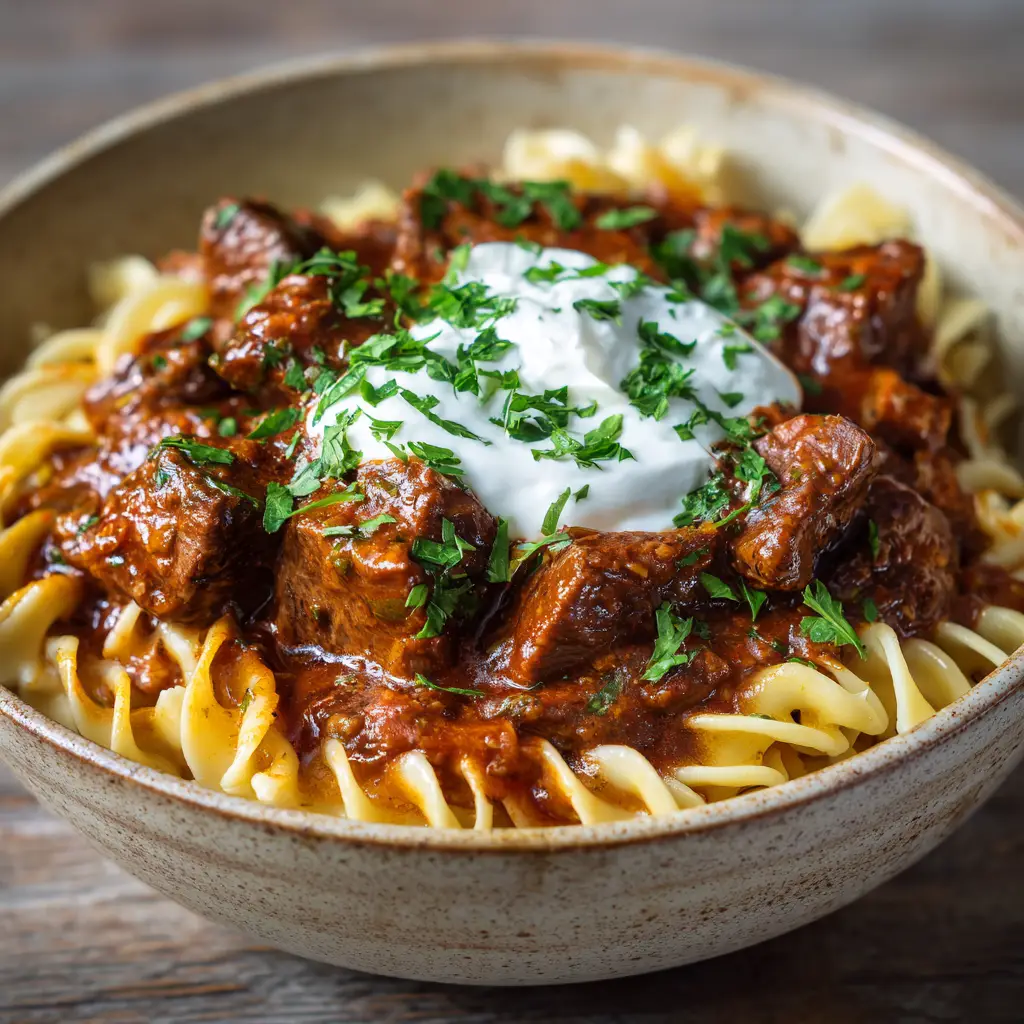
To serve, create a generous base layer of cooked curly egg noodles in a rustic bowl. Spoon the Rahmgulasch heavily over the top, ensuring you get plenty of beef and that thick, creamy gravy. Place a distinct dollop of smooth white sour cream right in the center and sprinkle lightly with the finely chopped fresh green parsley. Serve immediately.
Expert Tips for Flawless Rahmgulasch
- Don’t Skip the Sear: Searing the beef is non-negotiable. It creates complex flavor and texture that you cannot achieve by simply boiling the meat.
- Use Full-Fat Sour Cream: Low-fat or fat-free sour cream has a higher water and protein content and is much more likely to curdle when heated. Stick with full-fat for a guaranteed smooth sauce.
- Let It Rest: Like many stews, Rahmgulasch is even better the next day. The flavors meld and deepen overnight, creating an even more delicious experience.
- Control Your Heat: After the initial sear, the rest of the cooking process should happen over low, gentle heat. A rolling boil will make the beef tough and can cause the sauce to separate.
Storing, Reheating, and Freezing Your Creation
Proper storage is key to enjoying your Rahmgulasch later.
Refrigeration: Store leftover Rahmgulasch in an airtight container for up to 4 days. It’s best to store the noodles separately to prevent them from becoming mushy.
Reheating: Gently reheat the goulash on the stovetop over low heat, stirring occasionally until warmed through. Avoid the microwave, as it can heat the sauce unevenly and cause the cream to separate.
Freezing: Due to the dairy content, freezing is not ideal as the sour cream sauce can become grainy upon thawing. If you must freeze, do so before adding the sour cream. You can then add the tempered sour cream during the reheating process.
Perfect Pairings for This Authentic German Rahmgulasch
While curly egg noodles are the perfect vessel as specified, this rich stew is wonderfully versatile. It’s a fantastic main course that pairs well with many comforting sides. For another soul-warming beef dish, this Slow Cooker Mediterranean Beef Stew (coming soon) is a fantastic option with a different flavor profile. If you love rich, beefy soups, you absolutely must try this incredible French Onion Beef Short Rib Soup (coming soon). And for a creamy dish from a different corner of the world, this Homemade Butter Chicken recipe (coming soon) is a guaranteed crowd-pleaser.
Frequently Asked Questions About Rahmgulasch
Here are answers to some common questions to ensure your success.
Yes. Follow the searing and onion-cooking steps on the stovetop first. Then, transfer everything except the sour cream and parsley to the slow cooker. Cook on low for 6-8 hours or high for 3-4 hours. Temper and stir in the sour cream during the last 15 minutes of cooking.
The key is to temper the sour cream. Before adding it to the hot stew, place the sour cream in a separate bowl and whisk in a ladle of the hot broth. This gently warms the sour cream, so it won’t curdle from temperature shock when mixed in.
Beef chuck roast is the ideal choice. It has excellent marbling of fat and connective tissue that breaks down during the long, slow simmer, resulting in incredibly tender, moist, and flavorful beef chunks.
The main difference is the ‘Rahm,’ which is German for cream. While classic Hungarian Goulash is typically a thinner, broth-based stew or soup, Rahmgulasch is defined by its rich, thick, and creamy sauce made with sour cream.
Egg noodles, as used in this recipe, or German egg dumplings called Spätzle are the most common and traditional pairings. Both are perfect for soaking up the delicious creamy gravy.
Your Printable Guide to Perfect German Rahmgulasch
Here is the complete recipe, ready for you to bring this authentic German classic to your own kitchen table. Remember to focus on the sensory cues—the sizzle of the beef, the aroma of the paprika, and the visual transformation of the sauce.
Authentic German Rahmgulasch: The Creamy Beef Stew of Your Dreams
Ingredients
Equipment
Method
- Pat beef chunks dry and season with salt and pepper. Heat oil in a Dutch oven over medium-high heat. Working in batches, sear beef on all sides until a deep brown crust forms. Remove beef and set aside.
- Reduce heat to medium, add onions and cook until soft (5-7 minutes). Add garlic and cook for 1 minute more. Sprinkle in flour and paprika, stirring constantly for 90 seconds to form a paste.
- Slowly whisk in 1 cup of beef broth, scraping the bottom of the pot. Add the remaining broth and the seared beef. Bring to a simmer, then reduce heat to low, cover, and cook for 90-100 minutes until beef is tender.
- In a separate bowl, whisk a ladle of the hot broth into the sour cream until smooth. Pour this tempered mixture back into the pot. Stir to combine and heat gently for 2-3 minutes, but do not boil.
- Serve hot over a bed of cooked curly egg noodles. Garnish with a dollop of sour cream and a sprinkle of fresh parsley.
Notes
Use Full-Fat Sour Cream: This is essential to prevent the sauce from curdling.
Let It Rest: The goulash tastes even better the next day as the flavors meld.
Control Your Heat: A gentle simmer is key to tender beef.
Share Your Culinary Masterpiece!
We can’t wait to see your Authentic German Rahmgulasch! If you make this recipe and love it, please leave a comment and a rating below. Your feedback helps other home cooks find and enjoy this classic dish.
For more visually stunning and delicious recipes, be sure to follow us on Pinterest. We’re always sharing new ideas to inspire your next meal!