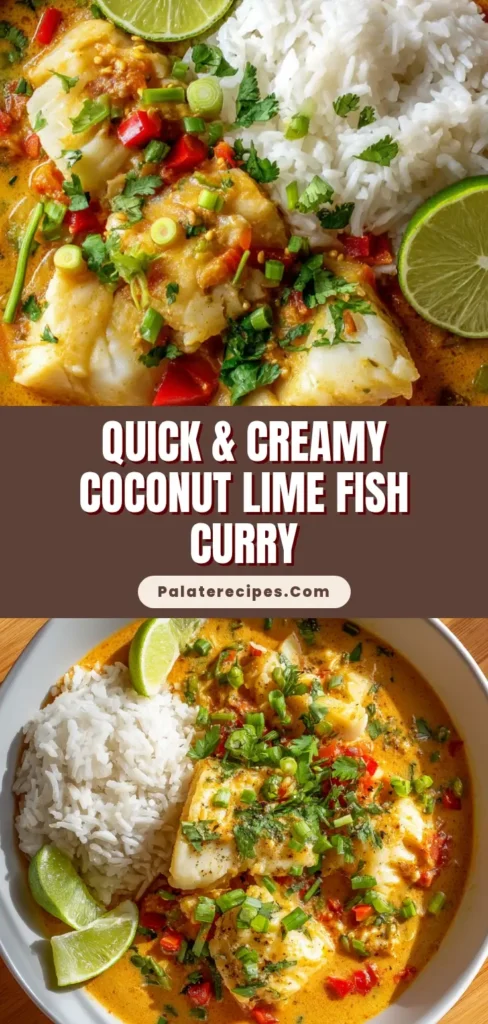
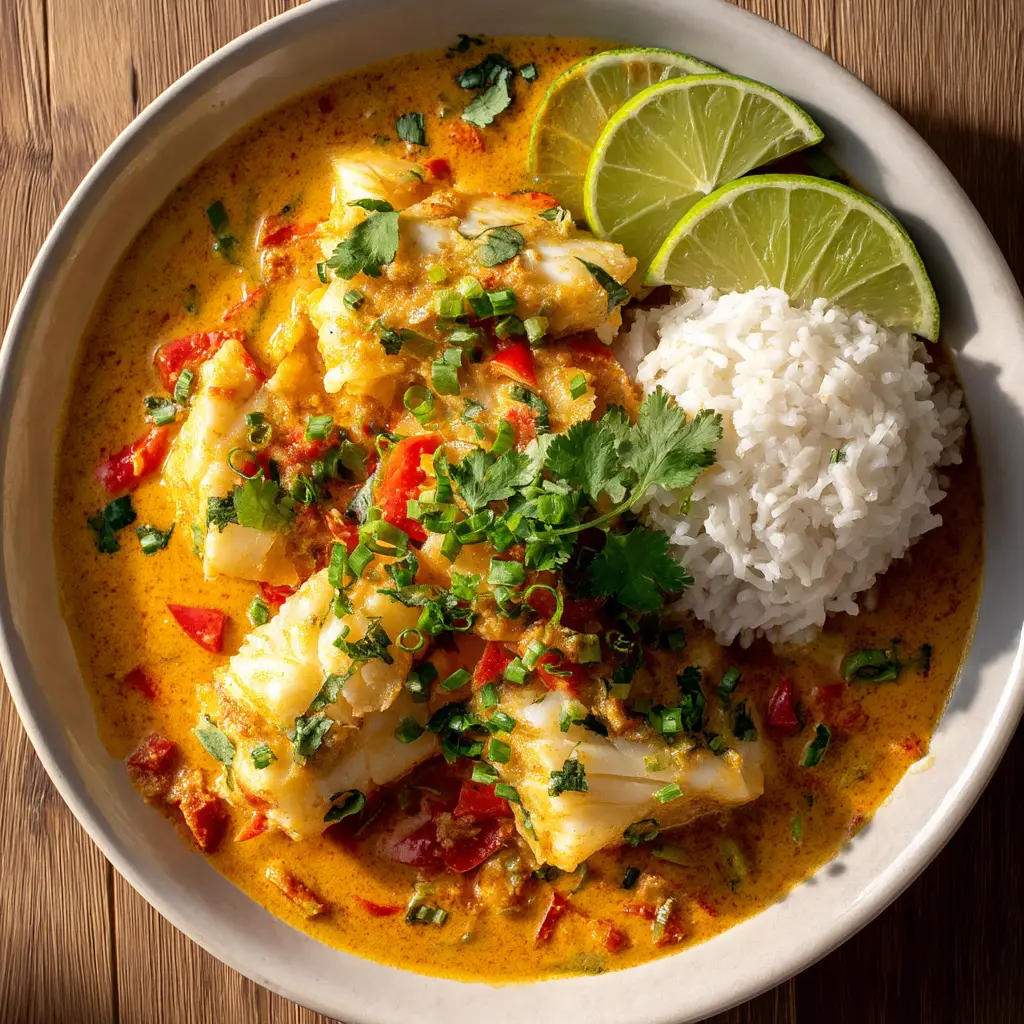
There is nothing quite as comforting as a warm, fragrant bowl of Coconut Lime Fish Curry. This recipe delivers a restaurant-quality experience right to your home kitchen. Picture a modern, shallow white ceramic bowl resting on a warm wooden table, filled with a creamy, rich orange-yellow curry.
Every spoonful of this dish offers large, flaky chunks of tender white fish, perfectly balanced by a luscious coconut broth. We will use fresh cod or halibut to achieve that signature meaty, satisfying bite. The vibrant color and complex flavor profile make this recipe an absolute showstopper.
Visual appeal is just as important as taste in this culinary masterpiece. Diced red bell pepper, finely chopped fresh cilantro, and vibrant green onions are scattered throughout the rich sauce. Paired with a scoop of fluffy, perfectly cooked white jasmine rice and vibrant green lime wedges, this coconut fish curry is a feast for the senses.
Why You’ll Love This Recipe
- Perfectly Flaky Fish: Gentle poaching ensures the cod or halibut stays in large, succulent chunks rather than disintegrating into the sauce.
- Creamy, Rich Texture: Full-fat coconut milk provides a luxurious mouthfeel that coats every bite of fish and rice perfectly.
- Vibrant Visuals: The orange-yellow hue from the turmeric and curry paste contrasts beautifully with the bright green cilantro and lime wedges.
- Balanced Flavors: The natural sweetness of the coconut milk is expertly cut by the sharp acidity of fresh lime juice and savory umami notes.
- Quick yet Complex: Despite tasting like it simmered all day, this coconut lime fish curry comes together in under 40 minutes.
The Core Ingredients & Substitutions
Creating a visually stunning and structurally sound curry requires precise ingredient selection. We must balance fats, acids, and aromatics to achieve the exact creamy orange-yellow texture. Always use fresh ingredients for the best flavor payoff.
Fresh White Fish (Cod or Halibut): You will need 1.5 lbs (680g) of thick-cut cod or halibut fillets. These specific varieties are crucial because their firm protein structure allows them to cook into large, distinct, flaky chunks. Avoid thin, delicate fish like tilapia, which will dissolve in the rich coconut broth.
Full-Fat Coconut Milk: Use 1 can (13.5 oz / 400ml) of premium full-fat coconut milk. Do not substitute with reduced-fat versions, as the fat content is scientifically necessary to create the creamy, rich texture. The fat also carries the fat-soluble flavor compounds from our spices.
Yellow Curry Paste: Measure out 2 tbsp (30g) of high-quality yellow curry paste. This provides the foundational aromatic baseline and contributes heavily to the vibrant orange-yellow hue. If you prefer a bit more heat, red curry paste can be used as a substitute.
Ground Turmeric: Add 1 tsp (3g) of ground turmeric powder. This invisible culinary powerhouse is the secret to locking in that intense, photograph-worthy orange-yellow color. It also adds a subtle, earthy depth to the coconut sauce.
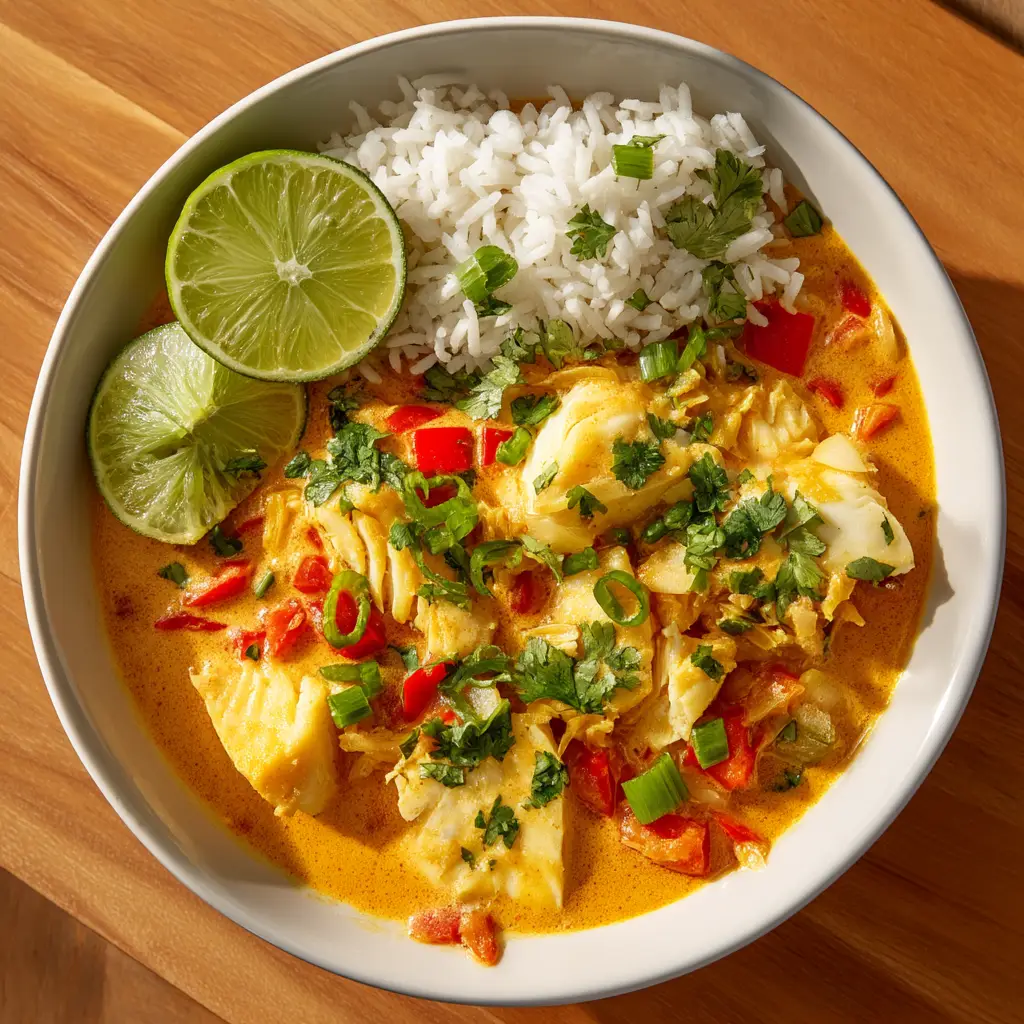
Red Bell Pepper: Finely dice 1 medium (120g) red bell pepper. The precise dicing ensures the sweet, crisp pepper is evenly distributed throughout the curry. Its bright red color pops beautifully against the yellow sauce.
Fresh Aromatics (Garlic & Ginger): Mince 1 tbsp (15g) of fresh garlic and 1 tbsp (15g) of fresh ginger. These invisible foundational ingredients must be sautéed to release their volatile oils. They form the flavor base that cuts through the heavy coconut fat.
Coconut Oil: Use 1 tbsp (15ml) of virgin coconut oil for sautéing your aromatics. Using coconut oil reinforces the tropical flavor profile of the dish. You can substitute olive oil or avocado oil if necessary.
Fish Sauce: Incorporate 1 tbsp (15ml) of premium fish sauce. This adds crucial umami and salinity, deepening the savory notes of the curry. If you have a shellfish allergy or aversion, soy sauce or tamari can be used.
Light Brown Sugar: Add 1 tbsp (15g) of light brown sugar to the simmering broth. A touch of sweetness is chemically required to balance the salty fish sauce and the acidic lime juice. It rounds out the sharp edges of the curry paste.
Fresh Cilantro: Finely chop 1/4 cup (15g) of fresh cilantro leaves. This herb provides a necessary burst of fresh, herbaceous flavor. The vibrant green specks scattered across the top elevate the visual presentation.
Green Onions (Scallions): Slice 2 stalks (30g) of fresh green onions. Use both the white and green parts for maximum flavor and visual contrast. They add a mild, peppery bite that cuts through the rich sauce.
Jasmine Rice: Prepare 1 cup (200g) of dry white jasmine rice. When cooked, this yields the perfect fluffy scoop to sit inside your shallow ceramic bowl. Its floral aroma pairs beautifully with the coconut milk.
Fresh Limes: Cut 1 large lime (60g) into vibrant green wedges. These are essential for garnishing the side of the bowl. The user should squeeze the fresh juice over the curry right before eating to awaken the flavors.
Essential Equipment for Perfection
You don’t need a commercial kitchen to make this Coconut Lime Fish Curry, but the right tools help. Proper heat distribution is key to avoiding broken coconut milk. Having your tools ready makes the cooking process seamless.
- Wide, Shallow Skillet or Braiser: A wide surface area is essential for poaching the fish evenly. This allows the fillets to sit in a single layer without overcrowding.
- Rice Cooker or Heavy-Bottomed Pot: Crucial for achieving perfectly fluffy white jasmine rice. A tight-fitting lid traps the steam necessary for even cooking.
- Sharp Chef’s Knife: Necessary for cleanly dicing the red bell pepper and finely chopping the fresh herbs without bruising them.
- Wooden Spoon or Silicone Spatula: Ideal for gently folding the fish into the sauce without breaking the large, flaky chunks apart.
Step-by-Step Instructions for Coconut Lime Fish Curry
Follow these precise culinary steps to ensure your dish matches the visual and flavor profile perfectly. The order of operations is scientifically designed to build flavor layers. Pay close attention to the sensory cues provided.
Step 1: Prepare the Fluffy Jasmine Rice
Begin by rinsing 1 cup (200g) of jasmine rice under cold water until the water runs clear. This removes surface starches that cause gummy, sticky rice. We want distinct, fluffy grains to sit alongside the curry.
Combine the rinsed rice with 1.5 cups (350ml) of water in your rice cooker or pot. Cook according to your appliance’s instructions, or simmer on the stove for 15 minutes. Once done, let it rest off the heat for 10 minutes before fluffing with a fork.
Step 2: Sauté the Aromatics
Place your wide, shallow skillet over medium heat and add 1 tbsp (15ml) of coconut oil. Wait until the oil shimmers and glides easily across the pan. This visual cue indicates the oil is hot enough to extract the flavors from your aromatics.
Add the minced garlic, minced ginger, and diced red bell pepper to the hot oil. Sauté for exactly 2-3 minutes, stirring continuously. You should smell a deeply fragrant, spicy aroma, and the bell peppers should just begin to soften.
Step 3: Bloom the Spices and Curry Paste
Push the aromatics to the edges of the skillet to create a hot spot in the center. Add the 2 tbsp (30g) of yellow curry paste and 1 tsp (3g) of ground turmeric directly to the hot pan. Sauté the paste for 60 seconds.
This process, called “blooming,” fries the spices in the residual oil. You will notice the color deepens significantly, and the smell will become intensely rich. This essential step unlocks the fat-soluble flavor compounds in the turmeric and curry paste.
Step 4: Build the Orange-Yellow Coconut Broth
Slowly pour the 1 can (13.5 oz / 400ml) of full-fat coconut milk into the skillet. Use your wooden spoon to scrape the bottom of the pan, lifting all the toasted curry paste and aromatics into the liquid. Whisk gently until the sauce becomes a uniform, creamy orange-yellow texture.
Stir in the 1 tbsp (15ml) of fish sauce and 1 tbsp (15g) of brown sugar. Bring the mixture to a gentle, bubbling simmer, not a rolling boil. Boiling coconut milk rapidly can cause the fat to separate, ruining the creamy mouthfeel.
Step 5: Poach the Fish to Flaky Perfection
Cut your 1.5 lbs (680g) of cod or halibut into large, 2-inch chunks. Generously season the fish pieces with a pinch of kosher salt. Carefully nestle the fish chunks into the simmering orange-yellow curry sauce in a single layer.
Reduce the heat to medium-low, cover the skillet, and let the fish gently poach for 6 to 8 minutes. The fish is done when it turns completely opaque white and flakes apart easily with gentle pressure from a fork. Do not over-stir, or you will lose the beautiful large chunks.
Step 6: Final Touches and Plating
Remove the skillet from the heat immediately to stop the cooking process. Gently fold in half of your finely chopped cilantro and sliced green onions. The residual heat will slightly wilt the herbs, releasing their fresh essential oils into the curry.
To plate, select a modern, shallow white ceramic bowl. Place a perfect scoop of fluffy jasmine rice on one side of the bowl. Ladle the creamy orange-yellow curry and large chunks of fish next to the rice.
Scatter the remaining diced red bell pepper, fresh cilantro, and green onions over the top for that final visual pop. Place two vibrant green lime wedges on the edge of the bowl. Serve immediately on a warm wooden surface.
Expert Culinary Tips for Success
- Do Not Agitate the Fish: Once the cod or halibut is in the pan, resist the urge to stir vigorously. Gentle folding is required to maintain the large, aesthetically pleasing chunks of protein.
- Control Your Simmer: Coconut milk is prone to “breaking” or separating if boiled aggressively. Keep the heat at a gentle, lazy bubble to maintain the rich, creamy texture.
- Acid is Everything: Do not skip the lime wedges. Squeezing fresh lime juice over the rich, heavy coconut fat right before eating provides a necessary acidic contrast that elevates the entire dish.
- Dry Your Fish: Before cutting and dropping the fish into the curry, pat the fillets completely dry with a paper towel. Excess moisture can water down your perfectly balanced curry sauce.
- Bloom Your Spices: Never just dump curry paste into liquid. Frying the paste in oil first (blooming) is the professional secret to unlocking deep, restaurant-quality flavor and a vibrant color.
Storage, Reheating, and Freezing
Proper storage is essential for maintaining the delicate texture of the fish. Allow the Coconut Lime Fish Curry to cool completely to room temperature before packing it away. Store the curry and the jasmine rice in separate airtight containers.
The curry will keep in the refrigerator for up to 3 days. When reheating, do so gently on the stovetop over low heat. Microwaving on high power will cause the fish to turn rubbery and the coconut milk to separate.
Freezing is not highly recommended for this specific dish. The delicate structure of the cooked cod or halibut tends to become mushy upon thawing. Furthermore, coconut milk can separate and become grainy after freezing and reheating.
What to Serve With Coconut Lime Fish Curry
This dynamic curry pairs beautifully with a variety of appetizers and side dishes to create a complete feast. If you want to keep the seafood theme going, consider starting with our grilled shrimp bowl as a light, protein-packed appetizer. The charred flavors contrast beautifully with the creamy coconut main course.
For a refreshing, acidic side to cut through the richness of the curry, try pairing it with a dollop of fresh tzatziki recipe on some warm flatbread. If you’re hosting a dinner party and want to offer a secondary protein option, our stuffed salmon is an elegant, oven-baked companion that won’t compete for stovetop space.
Looking for more Asian-inspired flavors to round out the table? Serve a side of our shrimp and broccoli stir fry. The crisp, vibrant green broccoli offers a fantastic textural crunch alongside the soft, flaky fish curry.
If you prefer a Mediterranean fusion night, you can substitute the jasmine rice with the grain base from our mediterranean salmon and rice recipe. The herbaceous rice pairs wonderfully with the bright lime and cilantro notes.
Finally, end the evening on a sweet, light note. After a rich, heavy coconut milk dinner, a chilled, zesty dessert is mandatory. We highly recommend our perfectly portioned lemon chia pudding to cleanse the palate.
Frequently Asked Questions
Freezing is not recommended. The freezing and thawing process alters the texture of the flaky white fish, making it mushy, and often causes the creamy coconut milk sauce to become grainy.
The rich color comes from a combination of blooming yellow curry paste and a teaspoon of ground turmeric in hot oil before adding the liquids. This unlocks the fat-soluble color compounds.
To prevent coconut milk from separating, you must maintain a gentle, lazy simmer rather than a rapid boil. Using full-fat coconut milk also helps stabilize the emulsion better than reduced-fat varieties.
This recipe uses yellow curry paste, which is typically quite mild and deeply aromatic. The heavy creaminess of the coconut milk also neutralizes much of the heat, making it very family-friendly.
Firm white fish like cod or halibut are the best choices. Their dense protein structure allows them to gently poach in the coconut sauce while remaining in large, flaky chunks without disintegrating.
Recipe Schema
Vibrant Coconut Lime Fish Curry
Ingredients
Equipment
Method
- Rinse the jasmine rice until the water runs clear. Cook the rice with 1.5 cups (350ml) of water in a rice cooker or pot. Let it rest for 10 minutes before fluffing with a fork.
- Heat the coconut oil in a wide, shallow skillet over medium heat. Add the minced garlic, minced ginger, and diced red bell pepper. Sauté for 2-3 minutes until fragrant.
- Push the aromatics to the side. Add the yellow curry paste and ground turmeric to the center of the pan. Sauté for 60 seconds to release the oils and deepen the color.
- Slowly whisk in the full-fat coconut milk, scraping the bottom of the pan to mix in the spices. Stir in the fish sauce and brown sugar. Bring to a gentle simmer.
- Season the fish chunks with salt and gently nestle them into the simmering curry sauce. Cover and poach for 6-8 minutes until the fish is opaque and flaky. Do not over-stir.
- Remove from heat and fold in half the cilantro and green onions. Serve the curry in a shallow white bowl alongside a scoop of jasmine rice. Garnish with remaining herbs, red bell pepper, and fresh lime wedges.
Notes
Control Your Simmer: Keep the heat low to prevent the coconut milk from separating.
Conclusion & Join Our Culinary Community
This vibrant Coconut Lime Fish Curry proves that you can achieve a visually stunning, restaurant-quality meal in your own kitchen. The contrast of the creamy orange-yellow sauce against the large, flaky white fish and bright green herbs is truly a culinary triumph. It is the perfect balance of rich, acidic, and savory flavors.
Did you recreate this gorgeous dish at home? We want to see your modern white ceramic bowls and perfectly fluffed jasmine rice! Leave a comment below letting us know how your curry turned out, and be sure to rate the recipe.
For more incredibly visual and delicious recipes, subscribe to our newsletter. Don’t forget to save this recipe for your next weeknight dinner or dinner party by pinning the image below to your Pinterest boards!