There’s nothing quite like the dense, chewy texture and malty flavor of a true New York bagel. For years, the magic behind this iconic bread was a closely guarded secret, often attributed to the city’s water. But I’m here to tell you that you can achieve that authentic deli-quality result right in your own kitchen. This New York Style Bagel Recipe will walk you through every critical step, from selecting the right flour to the essential boiling process, ensuring a perfect batch every time.
Forget everything you know about store-bought bagels. We’re diving deep into the craft of bagel making to create a product with a satisfyingly crisp crust, a densely chewy interior, and that classic, slightly sweet, malty flavor. It’s a rewarding weekend project that will fill your home with an incredible aroma and upgrade your breakfast forever. Ready to become a bagel master? Let’s get started.
What Makes a Bagel a “New York Style” Bagel?
So, what’s the big deal about New York bagels? The distinction lies in a few key techniques. First, authentic recipes use high-gluten flour, which is responsible for that signature dense and chewy texture. Second, they often include barley malt syrup for a subtle sweetness and beautiful golden color. Finally, and most importantly, the shaped bagels undergo a long, cold fermentation in the refrigerator. This slow proofing develops a deep, complex flavor. The last crucial step is boiling the bagels in a water bath before baking, which sets the crust and gives them their characteristic shine and chew.
Key Ingredients for the Perfect Chew
While the ingredient list is simple, the quality and type of each one matters immensely for this New York Style Bagel Recipe.
- High-Gluten Flour: This is the non-negotiable secret to an authentic chewy bagel. Bread flour is a good substitute, but if you can find high-gluten flour (like King Arthur’s Sir Lancelot), use it!
- Barley Malt Syrup: This adds a classic, subtle sweetness and helps the crust develop a beautiful golden-brown color. You can find it online or in specialty food stores. In a pinch, honey or brown sugar can be substituted, but the flavor will be slightly different.
- Active Dry Yeast: This is our leavening agent, responsible for the bagel’s rise. Ensure your yeast is fresh and active for the best results.
- Fine Sea Salt: Salt is crucial for flavor development and controlling the yeast’s activity.
- Baking Soda: Added to the boiling water, baking soda creates an alkaline environment that helps the crust brown beautifully in the oven, similar to how pretzels are made.
How to Make The Authentic New York Style Bagel Recipe
Making bagels is a two-day process, but the active time is minimal. The magic truly happens during the overnight cold proof.
Day 1: Making and Shaping the Dough
First, we’ll activate the yeast by dissolving it in warm water with a bit of sugar. Once it’s foamy, you’ll mix it with the flour, barley malt syrup, and salt. The dough will be very stiff—this is normal. Knead it for about 10-15 minutes by hand or with a stand mixer until it’s smooth and highly elastic. After a brief one-hour rest, you’ll divide the dough into equal portions and shape them. To get that classic shape, poke a hole through the center of each dough ball and gently stretch it to form a ring.
Day 2: The Boil and Bake
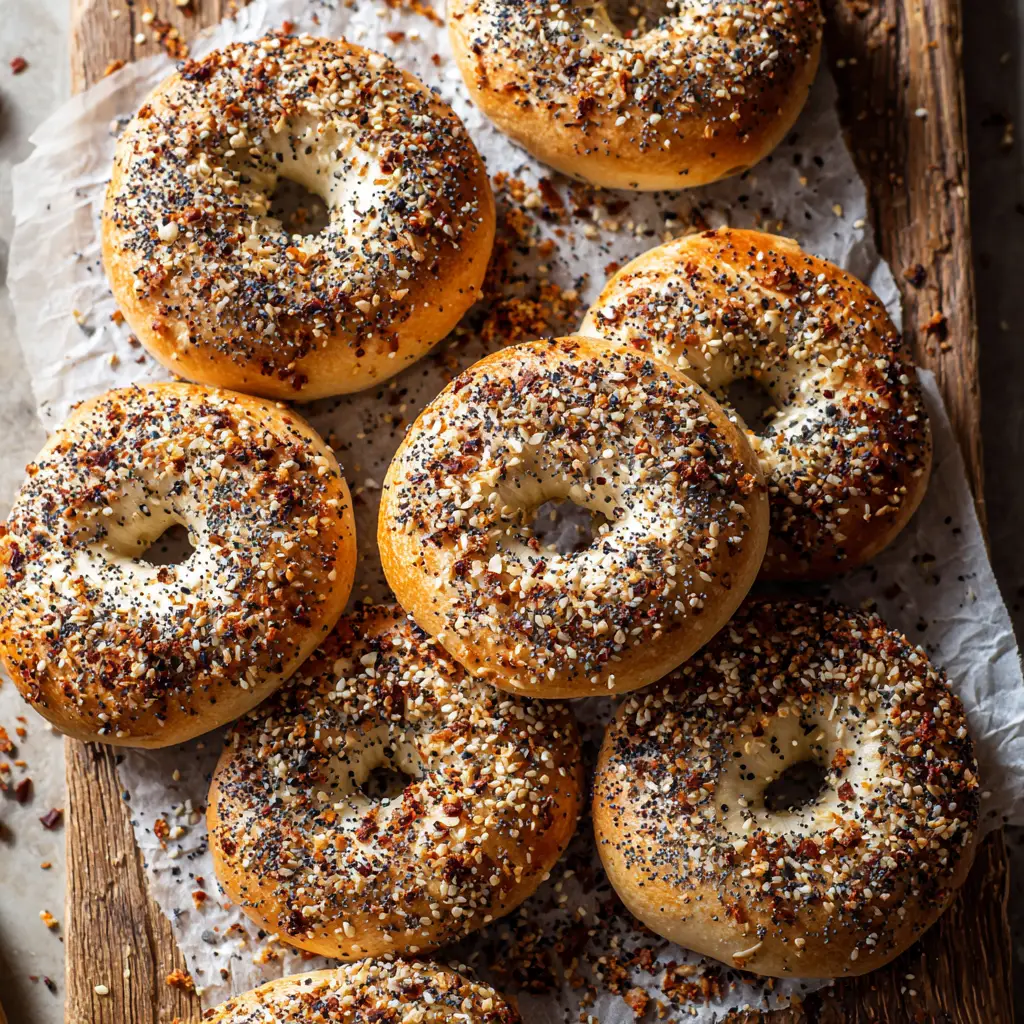
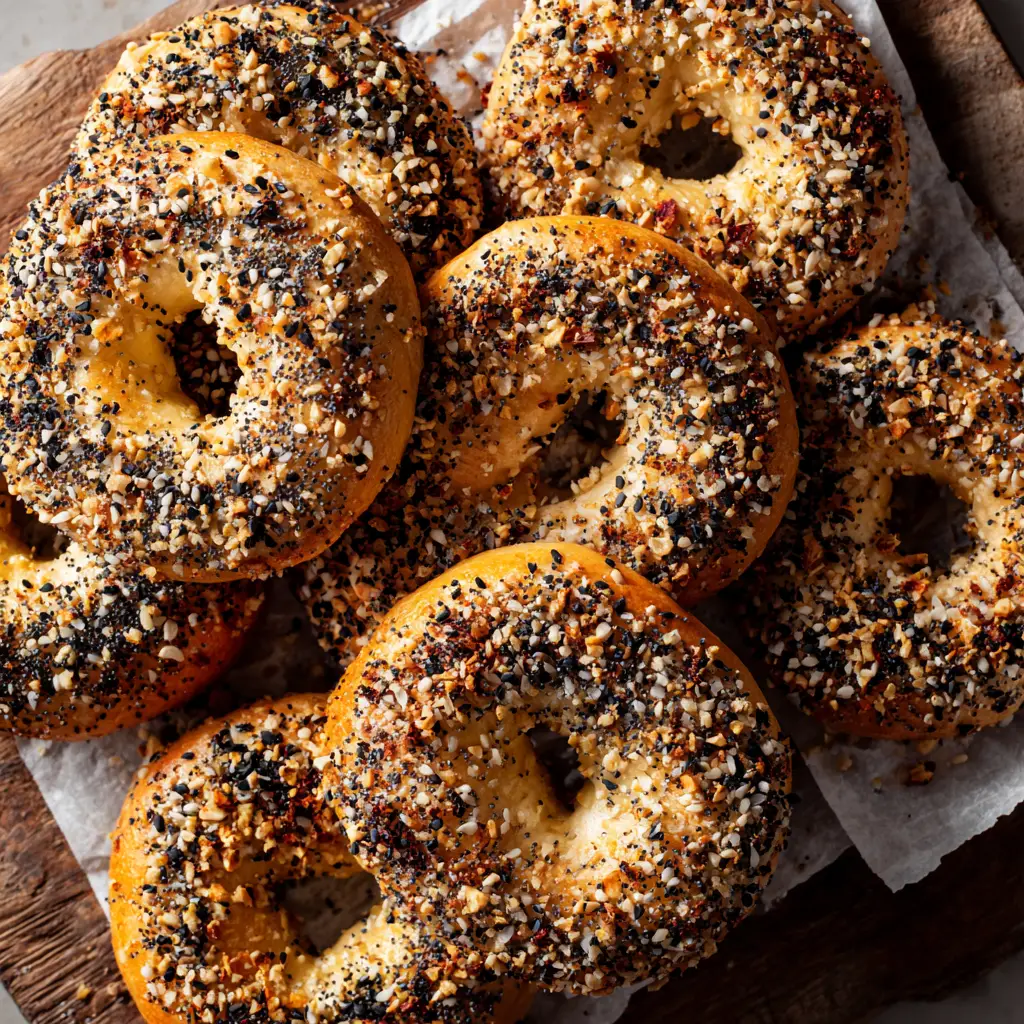
This is where the transformation happens. After their long, cold rest in the fridge, the bagels will look slightly puffy. You’ll prepare a pot of boiling water with more barley malt syrup and a touch of baking soda. Each bagel gets a quick bath, about 60-90 seconds per side. This step is what creates the chewy crust. After boiling, top them with your favorite seasonings—sesame seeds, poppy seeds, or make a batch of everything bagel spice—and bake them in a hot oven until they’re a deep golden brown.
Tips for Bagel-Making Success
Follow these tips to troubleshoot and perfect your homemade bagels.
- Don’t Rush the Cold Fermentation: The overnight proof in the refrigerator is essential for developing the complex flavors and chewy texture of a true New York bagel. Don’t skip or shorten this step!
- Ensure a Stiff Dough: The bagel dough should be much stiffer and drier than a typical bread dough. This low hydration is key to the dense, chewy interior. It might be tough to knead, but it’s worth it.
- Don’t Over-Boil: Boiling the bagels for too long can lead to a gummy interior and a crust that’s too thick. Stick to about 60-90 seconds per side for the perfect texture.
- Use a Spider Strainer: A spider strainer or a slotted spoon is the best tool for safely lowering and removing the bagels from the boiling water without deflating them.
For another great breakfast idea that’s perfect for a crowd, check out our recipe for easy and fluffy sheet pan pancakes. Or, if you’re in the mood for something savory, these ham and cheese puff pastries are a guaranteed hit.
Yes, you can substitute barley malt syrup with an equal amount of honey or brown sugar. While the flavor will be slightly different and less traditional, you will still achieve a delicious homemade bagel with a good crust.
The small blisters on a bagel’s crust are a sign of a well-developed dough. They are formed during the long, cold fermentation period in the refrigerator. This slow proofing allows gases to develop, creating those characteristic blisters when the bagels are baked in a hot oven.
The absolute best flour is high-gluten flour, which has a higher protein content (14% or more) that creates the classic dense, chewy texture. If you can’t find it, bread flour is the next best option and will still yield excellent results.
The secret lies in three key steps: using high-gluten flour for a chewy texture, a long cold fermentation (proofing) in the refrigerator to develop complex flavors, and boiling the bagels in a malted water solution before baking to create the signature shiny, chewy crust.
Flat bagels are usually caused by over-proofing the dough at room temperature or over-boiling. Ensure you follow the cold fermentation process in the refrigerator and limit the boiling time to 60-90 seconds per side to help the bagels maintain their shape.
Yes, you can substitute barley malt syrup with an equal amount of honey or brown sugar. While the flavor will be slightly different and less traditional, you will still achieve a delicious homemade bagel with a good crust.
The small blisters on a bagel’s crust are a sign of a well-developed dough. They are formed during the long, cold fermentation period in the refrigerator. This slow proofing allows gases to develop, creating those characteristic blisters when the bagels are baked in a hot oven.
The absolute best flour is high-gluten flour, which has a higher protein content (14% or more) that creates the classic dense, chewy texture. If you can’t find it, bread flour is the next best option and will still yield excellent results.
The secret lies in three key steps: using high-gluten flour for a chewy texture, a long cold fermentation (proofing) in the refrigerator to develop complex flavors, and boiling the bagels in a malted water solution before baking to create the signature shiny, chewy crust.
Flat bagels are usually caused by over-proofing the dough at room temperature or over-boiling. Ensure you follow the cold fermentation process in the refrigerator and limit the boiling time to 60-90 seconds per side to help the bagels maintain their shape.
Your New Favorite Breakfast
There you have it—the complete guide to making a truly authentic New York Style Bagel Recipe at home. The aroma of these baking is intoxicating, and the taste is unbeatable. We guarantee that once you’ve tried this recipe, you’ll never look at store-bought bagels the same way again. If you make these bagels, please share your creations and tag us on Pinterest! We love seeing your baking adventures.
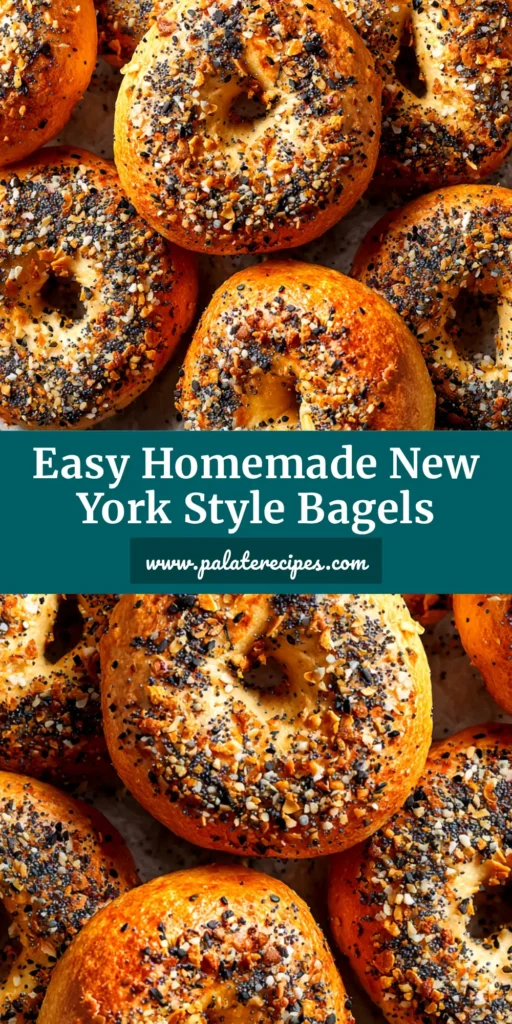
New York Style Bagel Recipe: The Ultimate Guide to Authentic, Chewy Bagels
Learn the secrets to a truly authentic New York Style Bagel Recipe. This detailed guide walks you through every step, from using high-gluten flour to the essential boil, for a perfectly chewy and delicious homemade bagel.
Ingredients
Equipment
Method
Prepare the Dough- In a small bowl, combine the warm water, yeast, and granulated sugar. Let it sit for 5-10 minutes until foamy.
- In the bowl of a stand mixer fitted with the dough hook, combine the flour and salt. Add the yeast mixture and 1 tbsp of barley malt syrup. Mix on low speed until a shaggy dough forms. Increase the speed to medium-low and knead for 10-12 minutes, or until the dough is smooth and very elastic. The dough will be stiff.
- Place the dough in a lightly oiled bowl, cover, and let it rest at room temperature for 1 hour.
Shape and Cold Proof- Turn the dough out onto a clean surface and divide it into 12 equal pieces. Roll each piece into a smooth ball.
- Press your thumb through the center of each ball to create a hole. Gently stretch the dough to form a 2-inch ring. Place the shaped bagels on a parchment-lined baking sheet.
- Cover the baking sheet tightly with plastic wrap and refrigerate for at least 12 hours and up to 24 hours.
Boil and Bake- Preheat your oven to 425°F (220°C). Line two baking sheets with parchment paper.
- In a large pot, bring 2 quarts of water, 1 tbsp of barley malt syrup, and the baking soda to a rolling boil.
- Gently drop 2-3 bagels at a time into the boiling water. Cook for 60-90 seconds per side. Use a spider strainer to remove them and place them back on the parchment-lined baking sheets.
- Brush the tops with an egg wash (optional, for extra shine) and sprinkle generously with your desired toppings.
- Bake for 20-25 minutes, rotating the pans halfway through, until the bagels are a deep golden brown.
- Let cool on a wire rack before slicing and enjoying.
Notes
The long, cold fermentation is crucial for flavor and texture—don't skip it!
For an even chewier bagel, you can let the boiled bagels sit for 5 minutes before applying toppings and baking.
Bagels are best enjoyed fresh but can be stored in an airtight container for up to 2 days or frozen for up to 3 months.
New York Style Bagel Recipe: The Ultimate Guide to Authentic, Chewy Bagels
Ingredients
Equipment
Method
- In a small bowl, combine the warm water, yeast, and granulated sugar. Let it sit for 5-10 minutes until foamy.
- In the bowl of a stand mixer fitted with the dough hook, combine the flour and salt. Add the yeast mixture and 1 tbsp of barley malt syrup. Mix on low speed until a shaggy dough forms. Increase the speed to medium-low and knead for 10-12 minutes, or until the dough is smooth and very elastic. The dough will be stiff.
- Place the dough in a lightly oiled bowl, cover, and let it rest at room temperature for 1 hour.
- Turn the dough out onto a clean surface and divide it into 12 equal pieces. Roll each piece into a smooth ball.
- Press your thumb through the center of each ball to create a hole. Gently stretch the dough to form a 2-inch ring. Place the shaped bagels on a parchment-lined baking sheet.
- Cover the baking sheet tightly with plastic wrap and refrigerate for at least 12 hours and up to 24 hours.
- Preheat your oven to 425°F (220°C). Line two baking sheets with parchment paper.
- In a large pot, bring 2 quarts of water, 1 tbsp of barley malt syrup, and the baking soda to a rolling boil.
- Gently drop 2-3 bagels at a time into the boiling water. Cook for 60-90 seconds per side. Use a spider strainer to remove them and place them back on the parchment-lined baking sheets.
- Brush the tops with an egg wash (optional, for extra shine) and sprinkle generously with your desired toppings.
- Bake for 20-25 minutes, rotating the pans halfway through, until the bagels are a deep golden brown.
- Let cool on a wire rack before slicing and enjoying.
Notes
For an even chewier bagel, you can let the boiled bagels sit for 5 minutes before applying toppings and baking.
Bagels are best enjoyed fresh but can be stored in an airtight container for up to 2 days or frozen for up to 3 months.