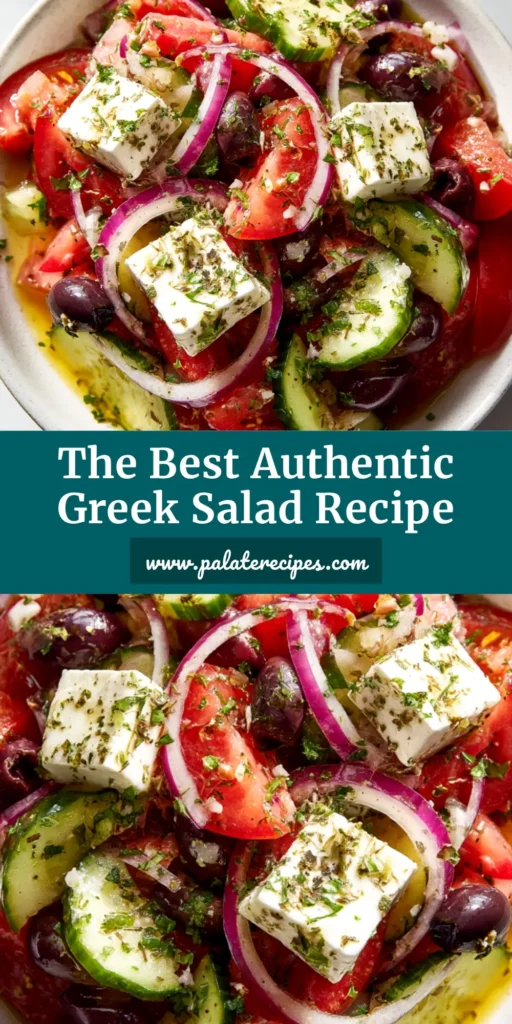
Craving a trip to the sunny Greek islands? This authentic Greek Salad Recipe is the next best thing. Forget the bland, lettuce-filled imitations you might be used to. We’re making a true Horiatiki salad, the kind you’d find in a seaside taverna in Greece. It’s a celebration of simple, incredibly fresh ingredients, bursting with vibrant Mediterranean flavor. This recipe is naturally gluten-free and comes together in just 15 minutes, making it the perfect healthy lunch or a stunning side dish for any meal.
What Makes a Greek Salad Authentic?
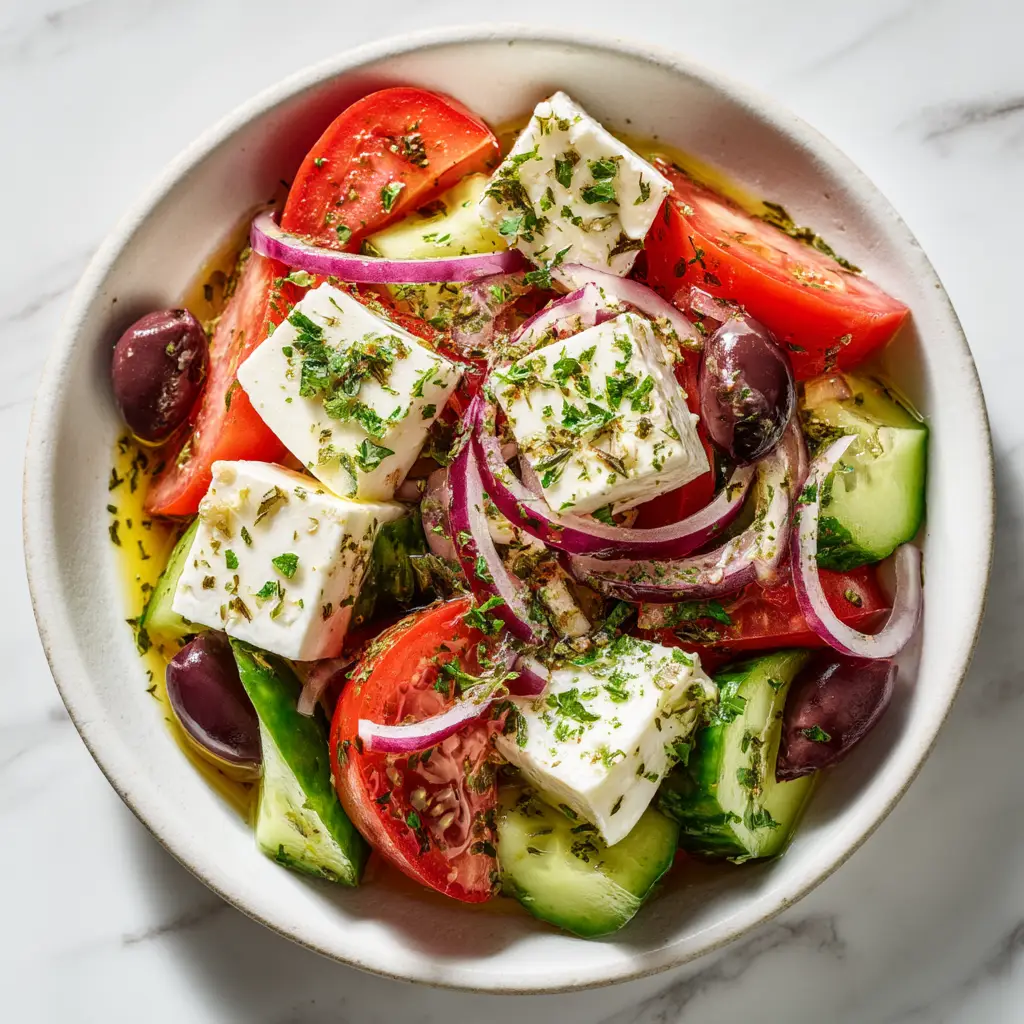
The secret to an authentic Greek salad lies in its name: “Horiatiki,” which translates to “village” or “peasant” salad. This isn’t a fancy dish; it’s a humble combination of the freshest vegetables available. The most important rule? No lettuce! A true Horiatiki is a chunky, hearty mix of ripe tomatoes, crisp cucumber, sharp red onion, and salty Kalamata olives. The entire salad is crowned with a generous block of feta cheese, never crumbled, and drizzled with a simple, high-quality dressing.
The Key to the Best Greek Salad Recipe: Fresh Ingredients
With so few components, the quality of each ingredient is what makes this dish sing. There’s nowhere for subpar produce to hide, so choose the best you can find.
The Vegetables
Use vine-ripened tomatoes for the best flavor and texture. A firm, dark green cucumber adds the perfect crunch, and a sharp red onion provides a zesty bite. Slice your vegetables into large, rustic chunks rather than dicing them finely.
The Feta Cheese
This is the star of the show. Opt for a block of Greek feta made from sheep’s milk, which is creamier and more flavorful than cow’s milk varieties. It should be packed in brine to ensure it’s moist and tangy. Always add the block whole or in large chunks on top of the salad just before serving.
The Olives
Kalamata olives are non-negotiable for their rich, fruity flavor and firm texture. Choose olives that are sold whole with the pits, as they have a much better taste and texture than pre-pitted ones.
The Dressing
A simple vinaigrette is all you need. The dressing for this Greek Salad Recipe consists of high-quality extra virgin olive oil, a splash of red wine vinegar, and a generous sprinkle of dried oregano. That’s it! The juices from the tomatoes will mingle with the dressing to create a delicious sauce at the bottom of the bowl.
How to Make Our Simple Greek Salad Recipe
This recipe is more about assembly than complex cooking. You’ll start by whisking together the simple three-ingredient vinaigrette. Next, you’ll chop your fresh vegetables into bite-sized pieces and add them to a large bowl. Finally, you’ll combine everything, top with that beautiful block of feta, and serve immediately for the freshest taste.
Step-by-Step Instructions
Prepare the Vinaigrette
In a small bowl, whisk together the extra virgin olive oil, red wine vinegar, and dried oregano. Season with a pinch of salt and freshly ground black pepper. Set it aside to allow the flavors to meld.
Chop the Vegetables
Wash and dry all your produce. Chop the tomatoes and cucumber into generous, bite-sized chunks. Thinly slice the red onion. Add all the prepared vegetables and the Kalamata olives to a large serving bowl.
Combine and Serve
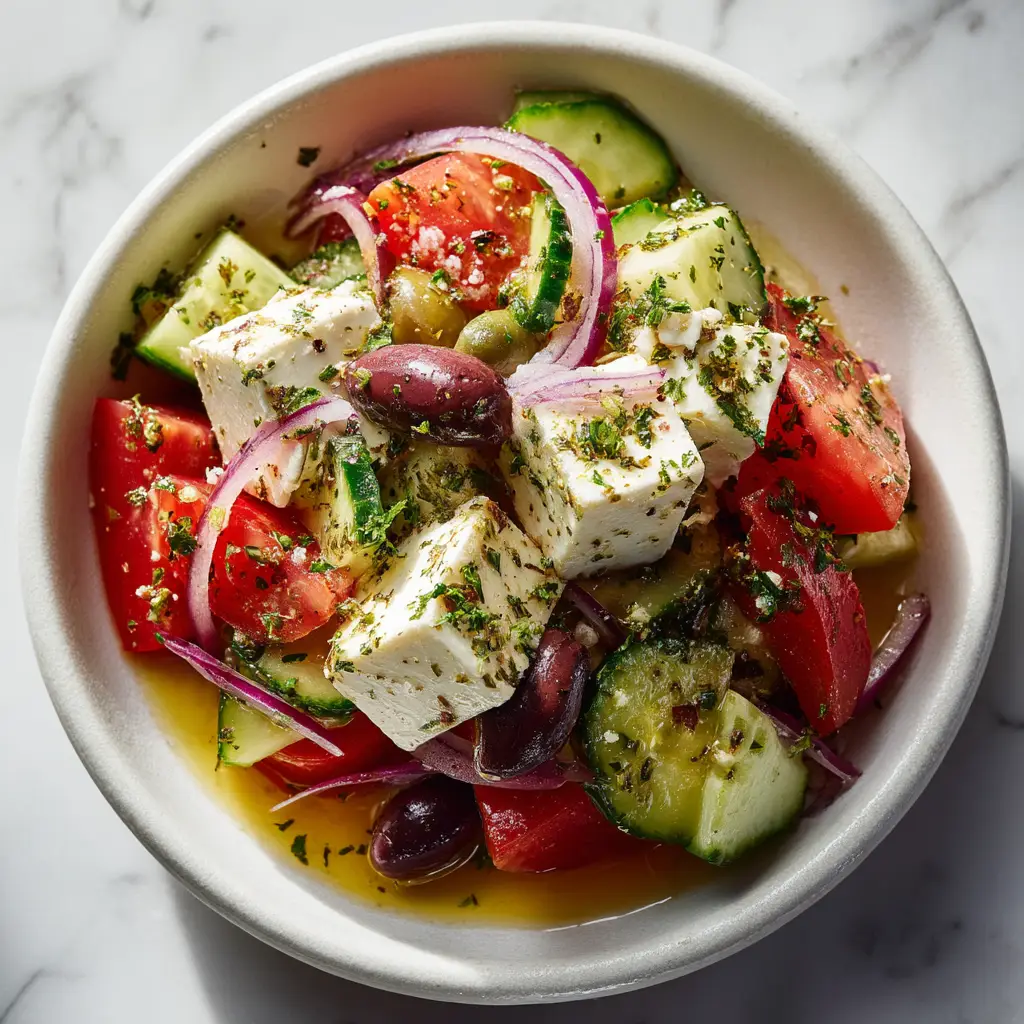
Pour the prepared vinaigrette over the vegetables and gently toss to combine. Place the block of feta cheese right on top. You can give it an extra drizzle of olive oil and a sprinkle of oregano for presentation. Serve immediately.
Greek Salad Recipe (The Authentic Horiatiki Way)
Ingredients
Equipment
Method
- In a small bowl or jar, combine the extra virgin olive oil, red wine vinegar, dried oregano, salt, and pepper. Whisk or shake well to combine.
- In a large serving bowl, add the halved tomatoes, chopped cucumber, thinly sliced red onion, and Kalamata olives.
- Pour the vinaigrette over the vegetables and toss gently to coat everything evenly.
- Place the entire block of feta cheese on top of the salad. Drizzle with a little more olive oil and sprinkle with extra oregano if desired. Serve immediately.
Notes
Serving: Serve with crusty bread to soak up the delicious juices and dressing at the bottom of the bowl.
Tips for Success
- Use the best ingredients: I can’t say it enough! The better your tomatoes, olive oil, and feta, the better your salad will be.
- Don’t crumble the feta: Placing the block on top allows each person to break off as much as they’d like. It also prevents the cheese from getting mushy and coating all the other ingredients.
- Season generously: Don’t be shy with the salt, pepper, and oregano. These simple seasonings are crucial for bringing out the flavors of the fresh vegetables.
- Let it marinate (briefly): Tossing the vegetables with the dressing 5-10 minutes before serving allows the flavors to meld together beautifully. Just don’t let it sit for too long, or the cucumbers will lose their crunch. For a heartier meal, try adding some perfectly grilled shrimp.
Delicious Variations and Add-ins
While this recipe is for a traditional Horiatiki, you can certainly customize it to your liking. Green bell peppers are a common addition in many parts of Greece. For a bit of extra protein and fiber, consider adding a cup of chickpeas. This salad is the perfect side for our Lemon Garlic Chicken or alongside some simple Baked Salmon in Foil.
Storing Your Greek Salad
Greek salad is best enjoyed fresh. If you have leftovers, you can store them in an airtight container in the refrigerator for up to 2 days. Be aware that the vegetables, especially the cucumbers and tomatoes, will soften and release more liquid over time. For best results, if you plan to make it ahead, store the chopped vegetables and dressing separately and combine them just before serving.
Frequently Asked Questions About This Greek Salad Recipe
Greek salad is best eaten the day it is made. However, you can store leftovers in an airtight container in the refrigerator for up to two days. The vegetables will soften over time as they marinate in the dressing.
No, a traditional and authentic Greek salad (Horiatiki) does not contain lettuce. It is a common addition in Americanized versions, but the classic recipe focuses on a chunky mix of tomatoes, cucumber, onion, and olives.
There is no difference! ‘Horiatiki’ is the Greek name for the traditional salad you know as a Greek salad. It translates to ‘village’ or ‘peasant’ salad, reflecting its simple, rustic origins using the freshest local ingredients.
For the most authentic taste, use a block of Greek feta cheese made from sheep’s milk and packed in brine. It is creamier and has a more complex, tangy flavor than feta made from cow’s milk. Always use a block, not pre-crumbled feta.
More Fresh Recipes You’ll Love
If you enjoyed this simple and refreshing Greek Salad Recipe, we know you’ll love exploring more of our fresh and flavorful dishes. We hope this becomes a staple in your kitchen! Be sure to share your creations and follow us on Pinterest for daily recipe inspiration.