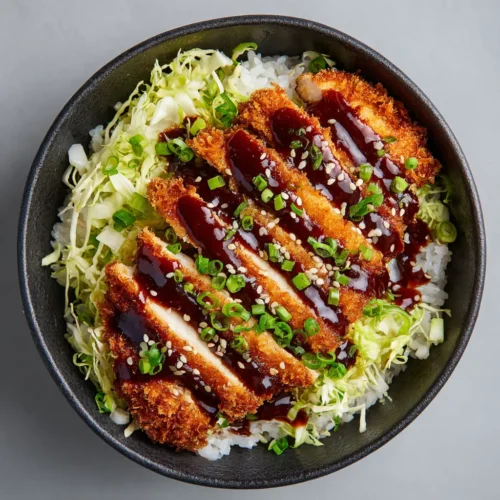
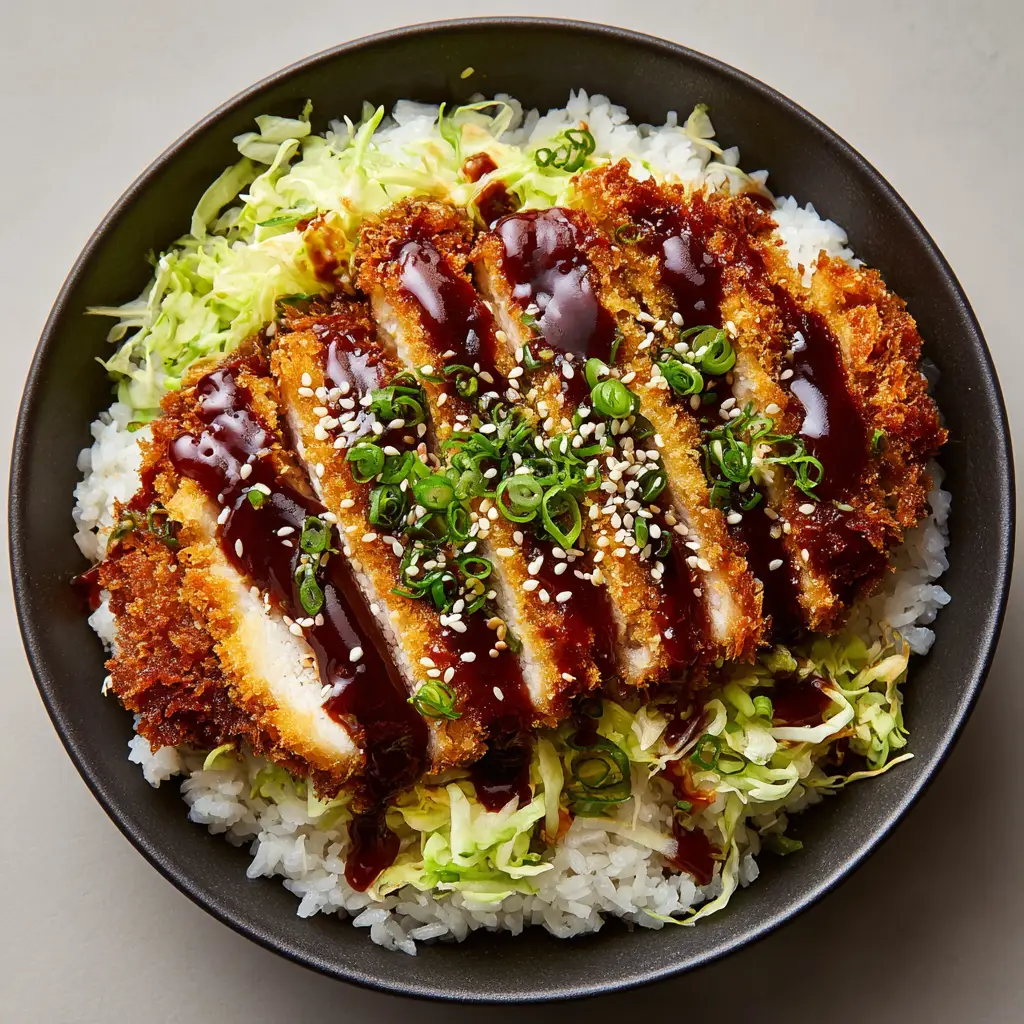
There are few dishes as universally satisfying as Japanese Katsu Bowls. It’s a masterpiece of texture and flavor, a symphony of crispy, savory, fluffy, and fresh all in one perfect bowl. This recipe is a love letter to that perfect bite: a thick, golden-brown panko-breaded chicken cutlet, impossibly juicy on the inside, resting on a bed of fluffy steamed rice and crisp cabbage, all brought together with a glossy, sweet, and tangy Tonkatsu sauce. Forget takeout; this is how you create that minimalist, picture-perfect bowl at home.
We’re moving beyond a simple recipe and into the technique. You’ll learn the secrets to ensuring your panko crust is shatteringly crisp and never soggy. You’ll see how the foundation of perfectly cooked short-grain rice and thinly shredded cabbage makes all the difference. This is your definitive guide to mastering restaurant-quality Japanese Katsu Bowls.
Why This Crispy Katsu Bowl Will Become Your New Weeknight Favorite
This isn’t just another recipe. It’s a complete system for achieving katsu excellence. Here’s what makes this method stand out:
- Unbelievable Crunch: We use a specific three-step breading process that guarantees a golden-brown panko crust that stays crispy, even after drizzling with sauce.
- Perfectly Juicy Chicken: By pounding the chicken to an even thickness, we ensure it cooks quickly and remains incredibly tender and moist inside its crunchy coating.
- Authentic Flavor Profile: The simple, homemade Tonkatsu sauce is the perfect balance of sweet, savory, and tangy, creating that glossy, dark brown drizzle you see in authentic katsu shops.
- A Feast for the Eyes: Following the visual blueprint of this recipe ensures a stunning final dish—from the crisp green scallions to the sprinkle of toasted sesame seeds, it looks as good as it tastes.
The Anatomy of a Perfect Katsu Bowl: Key Components
Every element in this bowl plays a crucial role. Understanding these components is the first step to building your perfect Japanese Katsu Bowl from the ground up.
For the Crispiest Golden-Brown Chicken Katsu
Boneless, Skinless Chicken Breasts: Two large breasts provide the tender, white meat canvas for our dish. Pounding them thin is non-negotiable for even cooking and maximum tenderness.
All-Purpose Flour: This is the essential first layer in our breading station. It gives the egg wash something to cling to, ensuring the panko crust is securely attached.
Eggs: Beaten eggs act as the glue, binding the panko to the chicken. This creates a cohesive and durable crust that won’t fall apart during frying.
Panko Breadcrumbs: These Japanese-style breadcrumbs are the star. Their large, airy flakes absorb less oil, resulting in a lighter, crunchier texture than standard breadcrumbs.
Neutral Frying Oil: Canola, vegetable, or peanut oil are perfect. Their high smoke point allows us to achieve that perfect golden-brown color without burning.
Salt and Black Pepper: These are foundational. Seasoning the chicken directly and the flour mixture builds layers of flavor from the very beginning.
For the Savory & Glossy Homemade Tonkatsu Sauce
Ketchup: This forms the sweet and tangy tomato base of our sauce. It provides the classic flavor and glossy texture we’re looking for.
Worcestershire Sauce: This brings a deep, savory, umami complexity that is the signature of a great Tonkatsu sauce. It adds a fermented, spiced kick.
Oyster Sauce or Soy Sauce: Oyster sauce adds a touch of sweetness and seafood-based umami. If you prefer, a good quality soy sauce provides a saltier, sharper flavor.
Granulated Sugar: Just a pinch is needed to balance the acidity of the ketchup and the saltiness of the other ingredients, rounding out the sauce perfectly.
For the Fluffy Rice & Crisp Vegetable Foundation
Japanese Short-Grain Rice: This is essential for the right texture. It’s slightly sticky and fluffy, creating the perfect base to absorb the sauce and complement the chicken.
Green Cabbage: A quarter of a head, shredded paper-thin, adds a cool, crisp, and refreshing crunch that cuts through the richness of the fried chicken.
Toasted White Sesame Seeds: Toasting these seeds in a dry pan awakens their nutty aroma and adds another layer of texture and visual appeal to the finished bowl.
Green Scallions: Thinly chopped, these provide a final burst of bright, fresh, and mild onion flavor. The vibrant green color makes the dish pop.
Essential Tools for Restaurant-Quality Katsu
You don’t need a professional kitchen, but a few key tools will make the process much smoother and guarantee a perfect result.
- Large, Heavy-Bottomed Skillet or Dutch Oven: For maintaining a steady oil temperature for even frying.
- Tongs: Essential for safely flipping the cutlets without piercing the crust.
- Wire Rack: Crucial for letting the katsu rest after frying. This allows air to circulate, preventing the bottom from becoming soggy.
- Shallow Dishes or Pie Plates: For setting up your three-stage breading station (flour, egg, panko).
- Mandoline or Sharp Chef’s Knife: To get that paper-thin shredded cabbage for the perfect texture.
Assembling Your Masterpiece: A Step-by-Step Visual Guide
Follow these steps closely, paying attention to the sensory cues. The process is just as rewarding as the final bite.
Step 1: Crafting the Perfect Rice and Crisp Cabbage Base
First, cook your Japanese short-grain rice according to package directions. While the rice steams, prepare your vegetables. Using a mandoline or a very sharp knife, shred the green cabbage as thinly as possible. Place it in a bowl of ice water for 10-15 minutes to make it extra crisp, then drain thoroughly.
Next, toast the white sesame seeds in a small, dry skillet over medium heat. Stir constantly until they become fragrant and lightly golden, about 2-3 minutes. Finally, thinly slice your green scallions and set both garnishes aside. This prep work is key to a smooth assembly process.
Step 2: Achieving the Perfect Panko Crust
Place the chicken breasts between two pieces of parchment paper and pound them to an even ½-inch (1.25cm) thickness. Season both sides generously with salt and pepper. Set up your breading station with three shallow dishes. Fill the first with flour seasoned with a pinch of salt and pepper, the second with two beaten eggs, and the third with the panko breadcrumbs.
Dredge one chicken cutlet in the flour, shaking off any excess. Next, dip it entirely in the egg wash, letting the excess drip off. Finally, press the cutlet firmly into the panko, ensuring it’s completely coated on all sides. Place the breaded cutlet on a plate and repeat with the second breast.
Step 3: The Art of the Golden-Brown Fry
In your heavy-bottomed skillet, pour in about 1 inch (2.5cm) of neutral oil. Heat over medium-high heat until the oil reaches 350°F (175°C), or until a panko breadcrumb sizzles immediately upon contact. Carefully lay the chicken cutlets in the hot oil, ensuring not to overcrowd the pan. If needed, cook them one at a time.
Fry for 3-5 minutes per side. You’re looking for a deep, vibrant golden-brown color. Listen for a steady, energetic sizzle. Once cooked, transfer the cutlets to a wire rack to drain. Never place them on paper towels, as this will trap steam and make the bottom soggy.
Step 4: The Final Assembly – Building Your Japanese Katsu Bowl
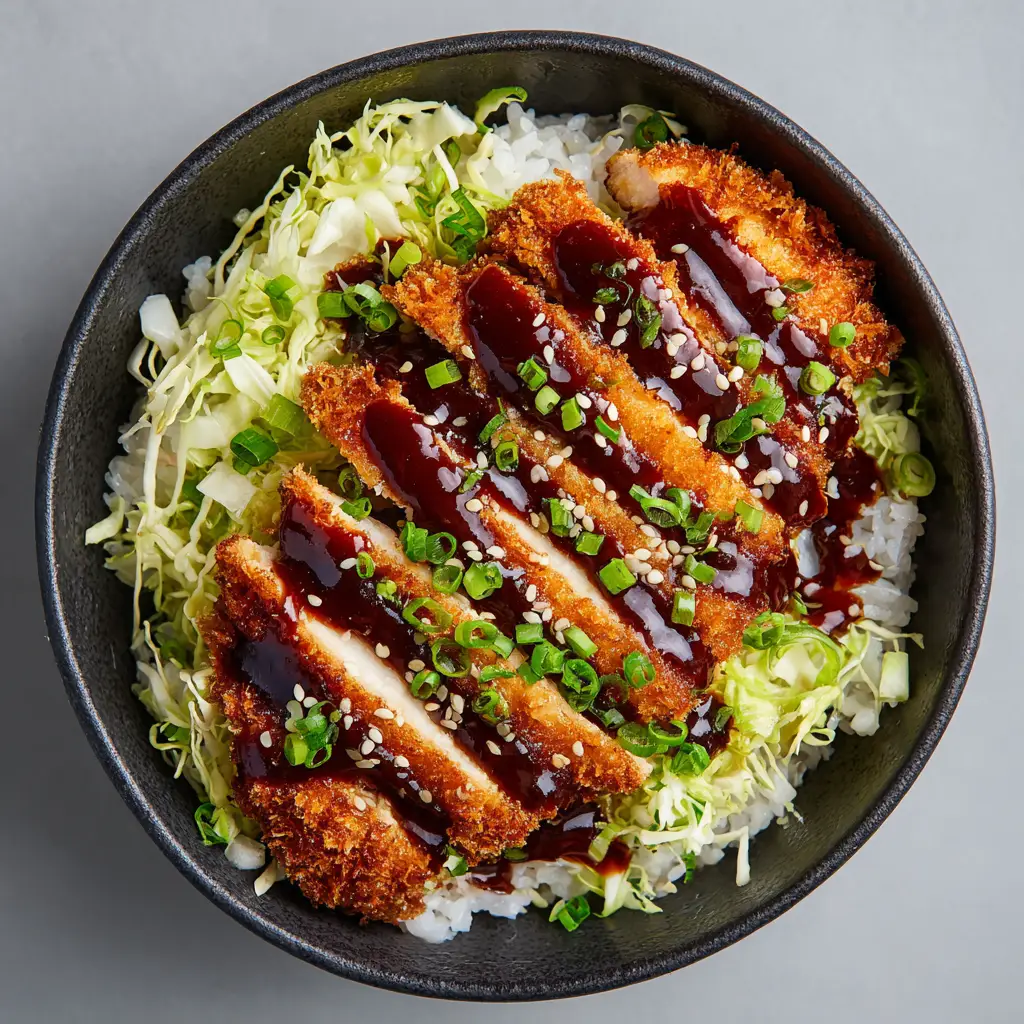
Let the chicken rest for a few minutes before slicing it into five even, 1-inch (2.5cm) wide strips. While it rests, whisk together the ketchup, Worcestershire sauce, oyster sauce (or soy sauce), and sugar in a small bowl to create your glossy Tonkatsu sauce.
To build your bowls, divide the fluffy steamed rice between two minimalist matte black ceramic bowls. Top with a generous handful of the crisp, shredded cabbage. Arrange the sliced chicken katsu strips over the cabbage. Drizzle the Tonkatsu sauce generously in a zig-zag pattern over the crispy cutlet. Garnish with a sprinkle of toasted sesame seeds and freshly chopped scallions. Serve immediately.
Culinary Secrets for Flawless Katsu Every Time
- Don’t Skip Pounding: Pounding the chicken isn’t about aggression; it’s about creating an even thickness for fast, uniform cooking. This is the secret to juicy, never-dry katsu.
- The “Dry Hand, Wet Hand” Method: Use one hand for the dry ingredients (flour, panko) and the other for the wet (egg) to avoid clumpy, messy fingers during breading.
- Monitor Your Oil Temperature: If the oil is too cool, the katsu will be greasy. If it’s too hot, the panko will burn before the chicken is cooked. A steady 350°F (175°C) is the sweet spot.
- Rest on a Wire Rack: This is the most critical post-frying step. The air circulation prevents the bottom of the cutlet from steaming and turning soft, preserving that perfect crunch.
Storing, Freezing, and Reheating Your Katsu Components
It’s best to enjoy Japanese Katsu Bowls fresh, but you can store the components separately. Keep cooked rice and shredded cabbage in airtight containers in the refrigerator for up to 3 days. The Tonkatsu sauce can be stored in a jar in the fridge for up to two weeks.
Cooked chicken katsu can be stored in the fridge for 2 days. To reheat and revive the crunch, place it on a baking sheet in an oven or toaster oven at 375°F (190°C) for 10-15 minutes until hot and crispy. Avoid the microwave at all costs, as it will make the breading soggy.
Perfect Pairings: What to Serve With Your Katsu Bowl
A katsu bowl is a complete meal, but if you’re looking to expand the spread, simple additions work best. Consider a side of steamed edamame or a simple miso soup. For those who love rice-based dishes, exploring other flavorful options like Authentic Spanish Rice can be a fun culinary adventure.
If you enjoy the comforting nature of this dish, you might also love a flavorful Honey Soy Chicken Bowl for another easy weeknight dinner. And for those who are fans of crispy-coated proteins, this Crispy Honey Garlic Tofu (coming soon) recipe offers a fantastic vegetarian alternative with a similar satisfying crunch.
Your Japanese Katsu Bowl Questions, Answered
Yes, for a lighter version. After breading, spray the cutlets generously with cooking oil and air fry at 400°F (200°C) for 15-20 minutes, flipping halfway through, until golden and cooked. The texture will be slightly less rich than when deep-frying.
The key is a dry surface and the classic three-step breading process: a light coating of flour, then a full dip in beaten egg, and finally, pressing firmly into the panko breadcrumbs. Don’t overcrowd the pan when frying for maximum crispiness.
“Katsu” is a broad term for a Japanese dish of a breaded and deep-fried cutlet. “Tonkatsu” specifically refers to a pork cutlet (“ton” means pork), while chicken katsu uses chicken. This recipe focuses on chicken katsu.
Tonkatsu sauce is a sweet and savory sauce. Our homemade version is a simple, glossy mixture of ketchup, Worcestershire sauce, oyster sauce (or soy sauce), and a bit of sugar for balance.
Use a neutral oil with a high smoke point, such as canola, vegetable, or peanut oil. This ensures the chicken cooks through perfectly without the oil burning and creating off-flavors.
The Only Japanese Katsu Bowl Recipe You’ll Ever Need
This is it—the definitive recipe for creating a stunning, delicious, and satisfying Japanese Katsu Bowl at home. Get ready to enjoy the crunch.
Japanese Katsu Bowls: The Ultimate Guide to Crispy Perfection
Ingredients
Equipment
Method
- Cook Japanese short-grain rice according to package instructions. While it cooks, thinly shred the cabbage and toast the sesame seeds in a dry skillet over medium heat until fragrant. Thinly slice the scallions.
- Pound chicken breasts to an even ½-inch (1.25cm) thickness and season both sides with salt and pepper.
- Set up a three-stage breading station: one dish with flour, one with beaten eggs, and one with panko. Dredge chicken in flour, then egg, then press firmly into the panko to coat completely.
- Heat 1 inch (2.5cm) of oil in a skillet to 350°F (175°C). Carefully place the breaded chicken in the hot oil.
- Fry for 3-5 minutes per side, until deep golden-brown and cooked through. Transfer to a wire rack to drain.
- In a small bowl, whisk together ketchup, Worcestershire sauce, oyster sauce (or soy sauce), and sugar to make the Tonkatsu sauce.
- Let the chicken rest for a moment, then slice into 5 even strips. Divide rice and cabbage into two bowls. Top with sliced chicken, drizzle with Tonkatsu sauce, and garnish with toasted sesame seeds and scallions.
Notes
The 'Dry Hand, Wet Hand' Method: Use one hand for dry ingredients and the other for wet to keep your breading station clean.
Monitor Your Oil Temperature: A steady 350°F (175°C) is key for a crispy, non-greasy cutlet.
Rest on a Wire Rack: This is the most crucial step to prevent a soggy bottom and maintain maximum crunch.
Share Your Culinary Creation!
Did you make these Japanese Katsu Bowls? I’d love to see your creation! Tag me on social media or leave a comment below with your experience. Don’t forget to save this recipe to your favorite board on Pinterest to make it again and again!