Ingredients
Equipment
Method
Prep Rice, Cabbage and Garnishes
- Cook Japanese short-grain rice according to package instructions. While it cooks, thinly shred the cabbage and toast the sesame seeds in a dry skillet over medium heat until fragrant. Thinly slice the scallions.
Prepare the Chicken
- Pound chicken breasts to an even ½-inch (1.25cm) thickness and season both sides with salt and pepper.
- Set up a three-stage breading station: one dish with flour, one with beaten eggs, and one with panko. Dredge chicken in flour, then egg, then press firmly into the panko to coat completely.
Fry the Chicken Katsu
- Heat 1 inch (2.5cm) of oil in a skillet to 350°F (175°C). Carefully place the breaded chicken in the hot oil.
- Fry for 3-5 minutes per side, until deep golden-brown and cooked through. Transfer to a wire rack to drain.
Make Sauce and Assemble Bowls
- In a small bowl, whisk together ketchup, Worcestershire sauce, oyster sauce (or soy sauce), and sugar to make the Tonkatsu sauce.
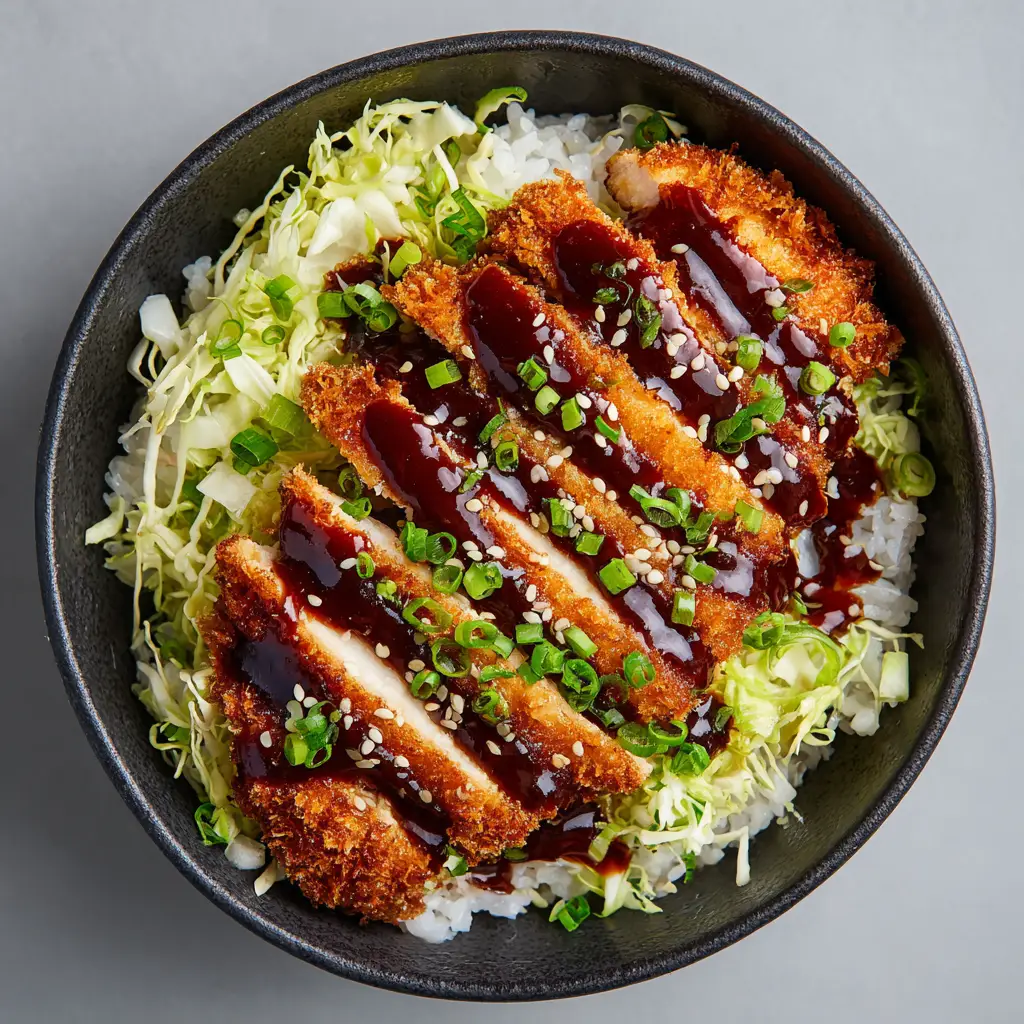
- Let the chicken rest for a moment, then slice into 5 even strips. Divide rice and cabbage into two bowls. Top with sliced chicken, drizzle with Tonkatsu sauce, and garnish with toasted sesame seeds and scallions.
Notes
Don't Skip Pounding: Pounding the chicken ensures it cooks quickly and evenly, keeping it juicy.
The 'Dry Hand, Wet Hand' Method: Use one hand for dry ingredients and the other for wet to keep your breading station clean.
Monitor Your Oil Temperature: A steady 350°F (175°C) is key for a crispy, non-greasy cutlet.
Rest on a Wire Rack: This is the most crucial step to prevent a soggy bottom and maintain maximum crunch.
The 'Dry Hand, Wet Hand' Method: Use one hand for dry ingredients and the other for wet to keep your breading station clean.
Monitor Your Oil Temperature: A steady 350°F (175°C) is key for a crispy, non-greasy cutlet.
Rest on a Wire Rack: This is the most crucial step to prevent a soggy bottom and maintain maximum crunch.