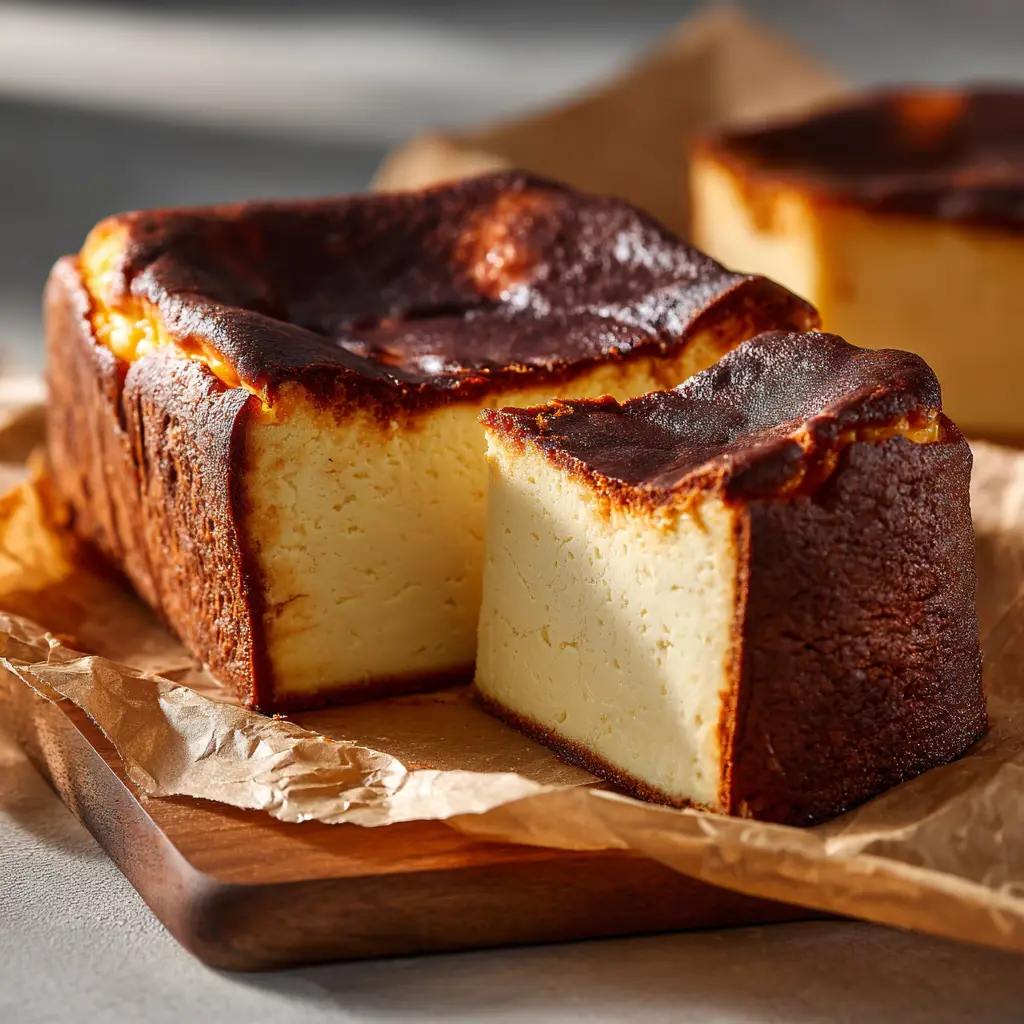
Discover the rustic elegance of the Burnt Basque Cheesecake Loaf, a dessert that defies expectations with its beautifully caramelized top and incredibly creamy, custard-like center. If you’ve been searching for a show-stopping dessert that is surprisingly simple to make, you’ve found it. This recipe transforms the trendy Spanish cheesecake into a convenient loaf form, perfect for slicing and sharing. Forget everything you know about traditional cheesecakes; there’s no fussy water bath, no graham cracker crust, and imperfections are celebrated.
We’re embracing the cracks and the deeply burnished color that give this dessert its signature look and complex, slightly bitter flavor that perfectly balances the sweet, rich interior. This Burnt Basque Cheesecake Loaf is the epitome of sophisticated simplicity, ready to impress at your next dinner party or satisfy a weeknight craving.
What Makes This Burnt Basque Cheesecake Loaf Recipe Special?
Unlike traditional cheesecakes that require delicate handling, this Burnt Basque Cheesecake Loaf thrives on high heat. The goal is to intentionally “burn” the top, creating a beautiful, dark crust that’s full of complex, caramelized flavor. This rustic approach means you don’t have to worry about cracks or imperfections—they are part of its charm! The loaf shape also makes it incredibly easy to slice and serve, offering a unique presentation compared to the classic round version. It’s a truly foolproof recipe for home cooks of any skill level.
The Magic of Using a Loaf Pan
Why a loaf pan? Using a loaf pan for this cheesecake creates a fantastic ratio of the caramelized “burnt” crust to the creamy interior in every single slice. It also makes portioning a breeze. The deeper pan encourages a slight rise and fall, contributing to the cheesecake’s unique texture. It’s a modern twist that makes an already easy dessert even more approachable and perfect for sharing.
Essential Ingredients You’ll Need
The beauty of this recipe lies in its simplicity. You only need a handful of high-quality, full-fat ingredients to achieve that signature creamy texture and rich flavor.
- Full-Fat Cream Cheese: This is the star of the show. It must be at room temperature to ensure a smooth, lump-free batter. Do not substitute with low-fat versions.
- Granulated Sugar: Provides the sweetness that balances the tangy cream cheese and the bitter notes from the caramelized top.
- Large Eggs: Also at room temperature, eggs are crucial for the structure and rich, custardy texture.
- Heavy Cream: Adds richness and moisture, contributing to the ultra-creamy consistency. Room temperature is best.
- All-Purpose Flour: Just a small amount is needed to give the cheesecake a bit of structure.
- Vanilla Extract: Enhances the other flavors and adds a touch of warmth.
- Salt: A pinch of salt balances the sweetness and brings out the complexity of the flavors.

Step-by-Step Instructions for the Perfect Cheesecake Loaf
Follow these simple steps to create a flawless Burnt Basque Cheesecake Loaf. The key is to have all your ingredients at room temperature before you begin.
- Preheat and Prepare: First, preheat your oven to 400°F (200°C). Generously grease a 9×5 inch loaf pan. Line the pan with two overlapping sheets of parchment paper, making sure the paper extends about 2 inches above the sides of the pan. This will make it easy to lift the cheesecake out later. The pleats and folds are normal and will create the classic rustic look.
- Beat Cream Cheese and Sugar: In a large bowl, using a stand mixer with the paddle attachment or a hand mixer, beat the room temperature cream cheese and granulated sugar on medium speed until completely smooth and creamy. Scrape down the sides and bottom of the bowl to ensure there are no lumps.
- Incorporate Eggs: Add the eggs one at a time, beating well after each addition until fully incorporated. Scrape the bowl again to maintain a smooth consistency.
- Add Wet Ingredients: Pour in the heavy cream and vanilla extract. Mix on low speed until just combined. Be careful not to overmix at this stage.
- Sift in Dry Ingredients: Sift the all-purpose flour and salt over the batter. Mix on low speed until the flour is just incorporated and the batter is smooth.
- Bake the Cheesecake: Pour the batter into your prepared loaf pan. Bake at 400°F (200°C) for 50-60 minutes. The cheesecake should be deeply caramelized (almost burnt-looking) on top and have a significant jiggle in the center when gently shaken. The internal temperature should be around 150°F (65°C) if you use a thermometer. For a more decadent cheesecake, you could try these amazing Creme Brulee Cookies.
- Cool Completely: Let the cheesecake cool completely in the loaf pan on a wire rack. This can take about 2-3 hours. Once at room temperature, cover and transfer to the refrigerator to chill for at least 4 hours, or preferably overnight. This step is crucial for the cheesecake to set properly.
Pro Tips for a Flawless Burnt Top and Creamy Center
Achieving the perfect balance in a Burnt Basque Cheesecake Loaf is simple with these expert tips.
- Room Temperature is Non-Negotiable: For the smoothest, creamiest batter, ensure your cream cheese, eggs, and heavy cream are all at room temperature. This prevents lumps.
- Don’t Be Afraid of the Color: The top needs to be a very deep brown, almost black in spots. This is where the signature caramelized, slightly bitter flavor comes from. Trust the process!
- The Jiggle is Key: The cheesecake is done when the edges are set, but the center still has a pronounced jiggle. It will continue to set as it cools and chills.
- Parchment Paper Sling: Leaving an overhang of parchment paper is the easiest way to lift the cheesecake out of the pan without damaging it.
For another easy yet impressive dessert, check out these Raspberry Cheesecake Bars. They’re a guaranteed crowd-pleaser!
Flavor Variations to Try
While the classic version is divine, this Burnt Basque Cheesecake Loaf is a wonderful canvas for other flavors. Consider adding a teaspoon of lemon zest for a bright, citrusy note, or a tablespoon of espresso powder for a deep coffee flavor. A swirl of salted caramel or rich chocolate ganache before baking can also create a stunning and delicious result.
Storing Your Cheesecake Loaf
To store your cheesecake, wrap it tightly in plastic wrap or place it in an airtight container. It will keep in the refrigerator for up to 5 days. The flavors actually deepen and improve after a day or two! We do not recommend freezing this cheesecake, as it can alter the creamy texture upon thawing.
Frequently Asked Questions
Yes, absolutely. This recipe can be adapted for a 9-inch round springform pan. The baking time may need to be adjusted slightly, so start checking it around the 45-minute mark. The loaf pan simply offers a different presentation and slicing experience.
Yes, for the best results, you must use full-fat, block-style cream cheese. Low-fat or spreadable cream cheese has a higher water content and stabilizers that will negatively affect the final texture, making it less rich and creamy.
The cheesecake is done when the top is a very deep brown, the edges are set, and the center still has a distinct jiggle when you gently shake the pan. It will not look fully set in the middle. It finishes setting as it cools and chills in the refrigerator.
Cracks are a characteristic and celebrated feature of a rustic Burnt Basque Cheesecake! They happen because of the high baking temperature and the lack of a water bath. Embrace the cracks as part of its unique, rustic charm.
It’s called ‘burnt’ because it’s intentionally baked at a high temperature to create a deeply caramelized, dark brown to almost black top crust. This ‘burn’ gives it a unique, slightly bitter flavor that contrasts beautifully with the sweet and creamy interior.
The Perfect End to Any Meal
This Burnt Basque Cheesecake Loaf is more than just a recipe; it’s an experience. It’s the joy of creating something beautiful from simple ingredients and the delight of sharing it with people you love. We hope this becomes a staple in your dessert rotation. If you make it, we’d love to see! Share your creations and tag us on Pinterest.

Burnt Basque Cheesecake Loaf Recipe
Burnt Basque Cheesecake Loaf: The Ultimate Easy Recipe
Ingredients
Equipment
Method
- Preheat your oven to 400°F (200°C). Grease a 9x5 inch loaf pan and line it with two overlapping sheets of parchment paper, ensuring the paper extends about 2 inches above the sides.
- In a large bowl, beat the room temperature cream cheese and granulated sugar on medium speed until completely smooth and creamy. Scrape down the sides and bottom of the bowl.
- Add the eggs one at a time, beating well after each addition until fully incorporated.
- Pour in the heavy cream and vanilla extract. Mix on low speed until just combined.
- Sift the all-purpose flour and salt over the batter. Mix on low speed until just incorporated and the batter is smooth.
- Pour the batter into the prepared loaf pan. Bake for 50-60 minutes, until the top is deeply caramelized and the center has a significant jiggle.
- Let the cheesecake cool completely in the loaf pan on a wire rack. Then, transfer to the refrigerator to chill for at least 4 hours, or preferably overnight, before slicing and serving.
Notes
Don't be afraid to let the top get very dark – that's where the classic flavor comes from!
The cheesecake must be chilled completely before slicing to ensure it sets properly.